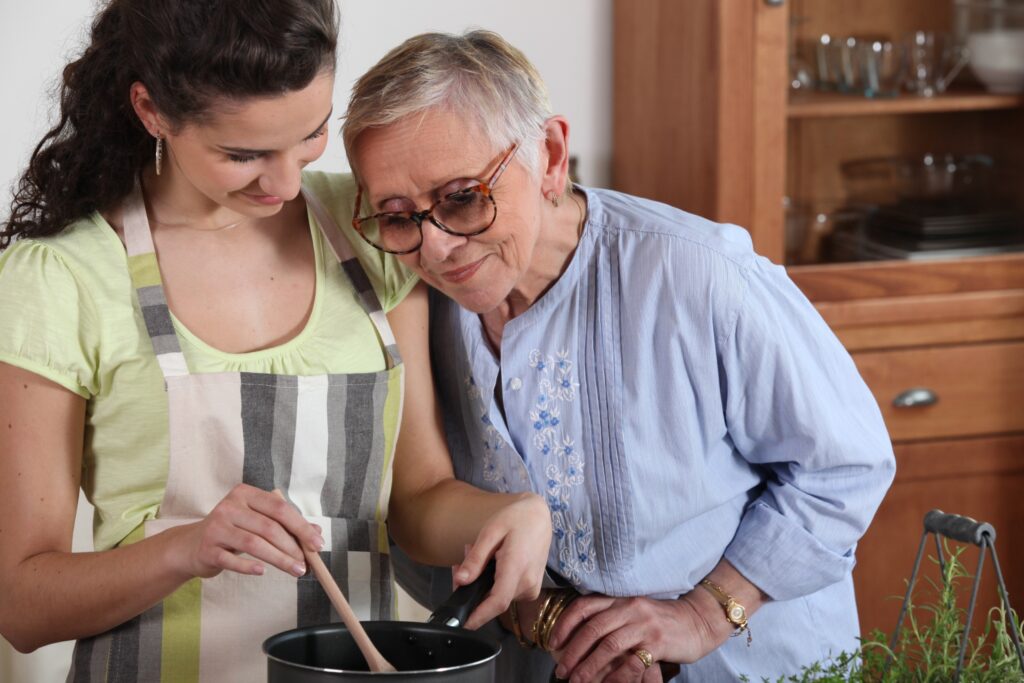
For many families in San Diego, the journey into senior care begins with a helping hand. It starts with picking up groceries for mom, driving dad to his cardiology appointment at Sharp, or helping with light housework. This is the “Companion” stage of caregiving, and for a while, it works.
However, when a loved one is diagnosed with a progressive condition—such as Parkinson’s, a movement disorder, or the long-term effects of a stroke—the nature of care changes. It shifts from “assistance” to “management.”
There often comes a silent, stressful moment when family members realize that love and effort are no longer enough to ensure safety and health. This guide explores the transition from family-led care to professional chronic illness management and why clinical oversight is the key to aging in place.
1. The Invisible Threshold: Signs You Need Professional Help with Chronic Illness Management
Most family caregivers are “plunged” into their roles without training. This can lead to caregiver burnout and, more importantly, a decline in the senior’s health.
Recognizing the Shift
You may need to transition to professional chronic illness management if:
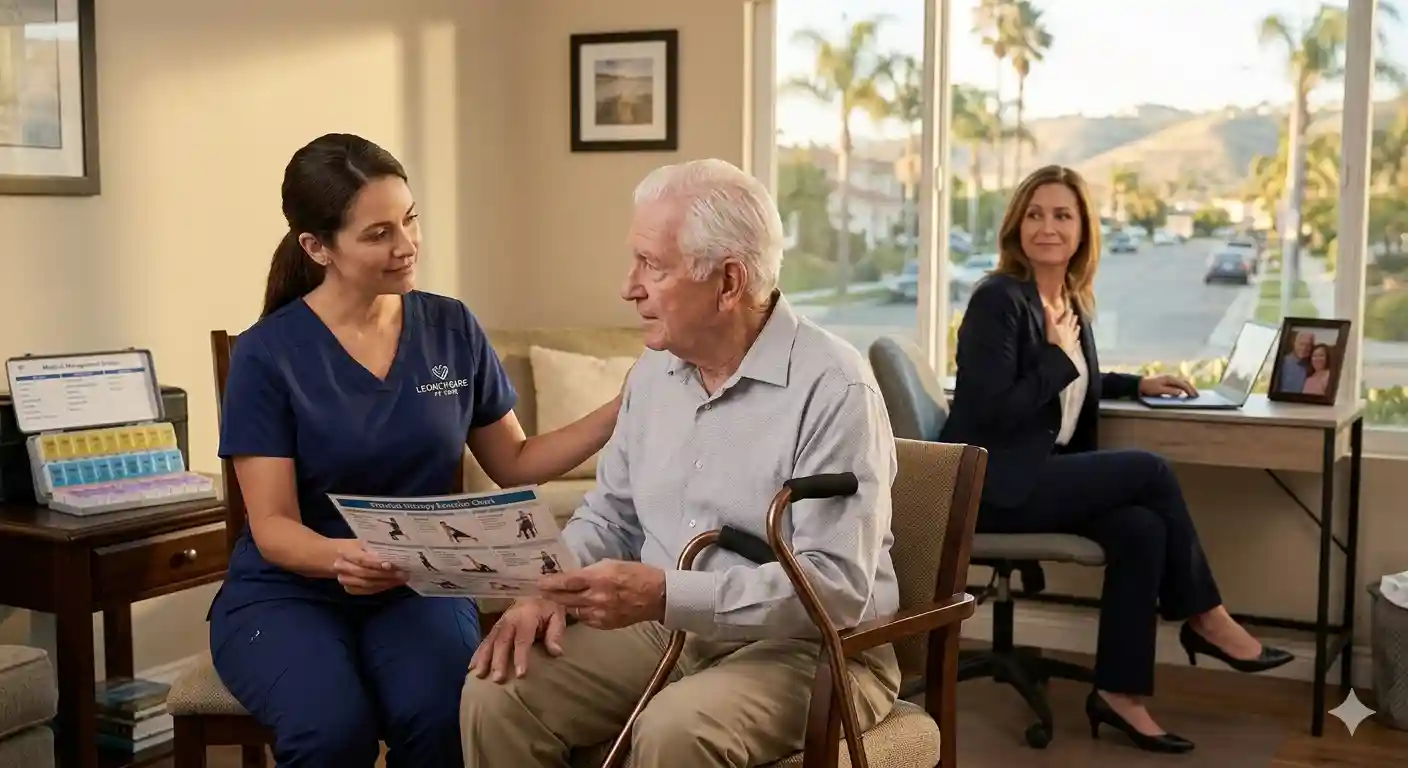
- Medication Complexity Increases: Managing a “pill box” is easy; managing a sliding scale of insulin or timed Parkinson’s medications (where being 15 minutes late causes a “freeze”) is medical work. (Learn about Medication Management.)
- Mobility Becomes a Risk: If your loved one has experienced “near-falls” or requires specialized equipment like a Hoyer lift or a gait belt, professional physical support is required.
- Frequent ER Visits: If you are visiting the emergency room for preventable issues like UTIs, dehydration, or minor falls, it indicates that the current home environment isn’t being managed clinically.
- Cognitive Changes: Wandering, “sundowning,” or aggressive behavior related to dementia requires specialized behavioral management techniques.
2. What is Professional Chronic Illness Management?
Unlike standard home care, which focuses on companionship, Professional Chronic Illness Management is a clinical approach to aging.
The Nurse-Managed Advantage
At Legacy Care at Home, our services are led by nurses. This is a critical distinction in the San Diego market. Professional management includes:
- Clinical Assessments: Regular evaluations of vitals, skin integrity, and cognitive status to catch issues before they become emergencies.
- Restorative Exercises: Implementing specialized movement plans to maintain muscle tone and prevent de-conditioning, especially after a stroke.
- Care Coordination: Acting as the “bridge” between the family and San Diego’s medical systems, such as Scripps or Kaiser Permanente, ensuring the doctor’s orders are actually followed at home.
3. Managing Specific Conditions at Home
Chronic illness management isn’t one-size-fits-all. Different conditions require different skill sets.
Parkinson’s and Movement Disorders
Managing Parkinson’s requires an understanding of “On/Off” cycles. A professional caregiver knows how to time meals and activities around medication to maximize the senior’s “On” time, reducing the risk of tremors and rigidity.
Post-Stroke Recovery
The first six months following a stroke are vital for neuroplasticity. Professional management focuses on Restorative Care, ensuring the senior performs their prescribed physical and occupational therapy exercises daily, rather than just sitting in a chair.
Diabetes and Heart Disease
Chronic conditions like CHF (Congestive Heart Failure) require daily weight monitoring and strict dietary management (low sodium). A professional manager tracks these metrics to prevent fluid buildup that leads to hospitalization.
4. The Toll of the “Sandwich Generation”
In San Diego’s high-pressure professional environment, many adult children find themselves in the “Sandwich Generation”—caring for aging parents while managing a career and raising their own children.
The Danger of Burnout
When a family member tries to provide “medical-grade” care without a medical background, they often experience:
- Compassion Fatigue: Feeling resentful or emotionally numb.
- Health Issues: Caregivers have a higher risk of hypertension and depression.
- Career Strain: Frequent absences from work to handle “emergencies” that could have been managed by a professional.
By hiring a professional agency, the family member can return to their most important role: being a son or a daughter.
5. Transitioning from Hospital to Home for Chronic Illness Management
One of the most dangerous times for a senior with a chronic illness is the transition from a San Diego rehab facility or hospital back to their own home.
The 4-Hour Response
At Legacy Care at Home, we know that transitions are fragile. This is why we offer care starts within four hours of your call. We don’t just “show up”; we ensure the home is set up, the discharge instructions are understood, and the first night back is safe. (Learn about Discharge Planning Guide.)
6. How to Choose a Chronic Illness Management in San Diego
When vetting agencies in North County or the San Diego metro area, ask these three questions:
- Who creates the care plan? (It should be a Nurse, not a salesperson).
- How do you handle specialized medical needs? (Ask about their experience with Parkinson’s or Stroke recovery).
- Can we meet the caregiver first? (Compatibility is essential for long-term success).
Conclusion: Investing in Quality of Life for Chronic Illness Management
Professional chronic illness management is not an admission of failure by the family; it is a commitment to the senior’s quality of life. It allows for a level of safety, medical adherence, and physical activity that is nearly impossible for a solo family caregiver to maintain.
If your family is reaching the limit of what you can provide at home, it’s time to look at a managed solution.
Take the Next Step Don’t wait for a crisis to occur. Ensure your loved one has the professional oversight they deserve. Contact Legacy Care at Home for a Private Care Assessment and discover how our nurse-managed approach can bring peace of mind back to your family.