A hospital discharge should be a milestone of recovery, but for many seniors and their families, it marks the beginning of an overwhelming transition. Leaving the highly controlled environment of a San Diego hospital to return home introduces major logistical challenges—from managing complex multi-medication regimens to configuring vital durable medical equipment (DME).
According to data compiled by the Center for Health Care Strategies, nearly one in five Medicare patients discharged from a hospital is readmitted within 30 days due to gaps in transitional care. In San Diego County, regional healthcare leaders work tirelessly to mitigate these risks. By executing a rigorous, proactive strategy, you can turn a vulnerable medical transition into a safe, sustainable journey toward independent recovery.
1. The Interdisciplinary Hospital Discharge Team
When an elderly loved one is admitted to an acute care facility, planning for their exit must begin almost immediately. Under federal guidelines, hospitals evaluate inpatients within 48 hours of admission to identify potential discharge barriers. This evaluation is spearheaded by an interdisciplinary team of specialists who balance clinical data with practical home logistics.
The RN Care Manager / Case Manager
Registered Nurse (RN) care managers act as the primary coordinators of your transition plan. They collaborate directly with your attending hospitalist or specialist to determine when a patient is medically stable for discharge. Organizations like the UC San Diego Health Care Management Team rely on RN care managers to review insurance authorizations, verify medical necessity, and ensure that a structured safety plan is in place before the patient leaves the facility.
The Hospital Social Worker
While care managers focus heavily on clinical milestones, hospital social workers navigate the emotional and practical realities of a care transition. They serve as essential patient advocates, connecting families to local community resources, assessing financial constraints, and helping families navigate specialized programs like Medi-Cal or the California Department of Aging services.
The Rehabilitation Team
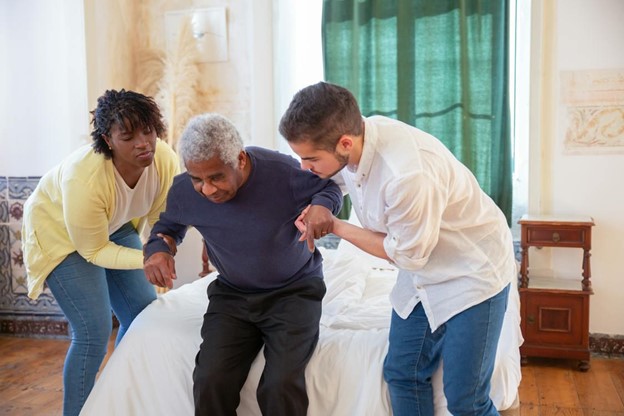
Physical therapists (PTs), occupational therapists (OTs), and speech-language pathologists evaluate the senior’s physical and functional capacity. They determine whether a patient can safely perform fundamental Activities of Daily Living (ADLs)—such as transferring out of bed, using the restroom, or climbing stairs—and outline precisely what equipment or human support will be required at home.
2. Choosing the Right Post-Hospital Destination
Depending on the severity of an illness or the complexity of a surgical recovery, returning directly home might not be the safest immediate step. The discharge team will recommend one of several pathways based on the patient’s functional assessment.
Acute Inpatient Rehabilitation
For seniors who have suffered severe neurological or orthopedic events—such as a stroke or a complex fracture—acute inpatient rehab offers an intensive recovery bridge. Facilities like the Sharp HealthCare Rehabilitation Program require patients to participate in a rigorous program consisting of at least three hours of therapy per day, five to seven days a week, overseen by a physical medicine physician.
Skilled Nursing Facilities (SNFs)
If a senior requires 24-hour skilled nursing observation or cannot tolerate the intense physical demands of acute rehab, a Skilled Nursing Facility represents the standard intermediate step. SNFs offer daily physical and occupational therapy at a slower pace, alongside skilled nursing procedures like wound care and intravenous medication administration.
Home Health Care vs. Non-Medical Care at Home
When a patient is approved to return directly home, it is critical to distinguish between two distinct forms of home-based support:
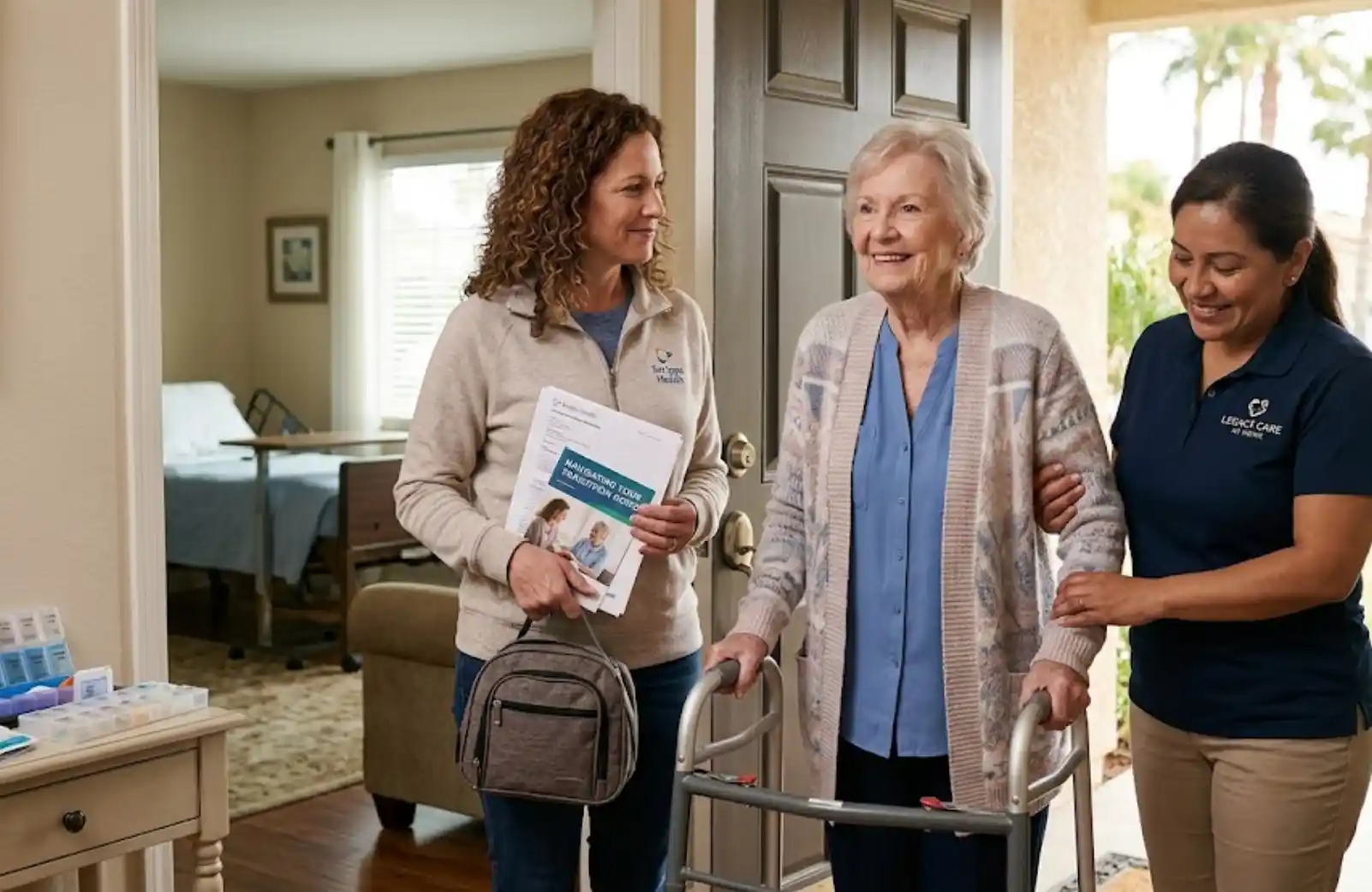
- Skilled Home Health Care: This clinical, intermittent service is prescribed by a physician and usually covered by Medicare or private insurance (Learn about what Medicare covers). It includes short visits from registered nurses, physical therapists, or speech therapists to monitor clinical progress. For instance, UC San Diego Health provides these specialized clinical services regionally through a joint venture with AccentCare Home Health.
- Non-Medical / Personal Care Services: These services focus on daily lifestyle support, including bathing, dressing, meal preparation, light housekeeping, and continuous safety supervision. Because these services are non-clinical, they are typically funded privately, via long-term care insurance, or through the state’s In-Home Supportive Services (IHSS) program.
3. Step-by-Step Discharge Timeline
Navigating the final 48 hours in a hospital requires active engagement from family members. Use this step-by-step framework to ensure crucial details are not missed in the rush of discharge day.
1.Initiate the Care Transition Plan:48 Hours Out.
Request a formal meeting with the hospital case manager. Review the preliminary discharge summary and clarify whether the patient will require specialized home medical equipment or home health nurse drop-ins.
2.Conduct a Comprehensive Medication Reconciliation:24 Hours Out.
Ensure the hospital pharmacy or attending physician compiles a complete list of all discharge medications. Cross-reference this list with the medications the patient was taking prior to hospitalization to eliminate dangerous duplications or omissions.
3.Secure Durable Medical Equipment (DME):Discharge Morning.
Confirm that critical tools—such as hospital beds, oxygen concentrators, wheeled walkers, or bedside commodes—have been ordered and delivered directly to the home. Do not attempt to transport a patient home until their immediate environment is equipped.
4.Participate in Hand-Off Education:Departure Window.
During nurse shift changes—which regional providers like Scripps Health utilize to securely pass patient data—caregivers should receive hands-on training for wound care, drain management, or specialized transfers.
5.Execute Follow-Up Care and Scheduling:First 72 Hours Home.
Coordinate transportation to all post-discharge medical appointments. Leading health systems expect a primary care follow-up visit to occur within 7 to 14 days of discharge to ensure recovery remains on track.
4. Medication Safety and Redundancy Prevention
Medication mismanagement is one of the most common catalysts for emergency room readmissions. When a patient transitions between care settings, their prescriptions change frequently, creating an environment ripe for adverse drug events.
To maximize safety, family caregivers should request a structured Medication Reconciliation statement. This document clearly distinguishes between three critical categories:
- Medications to Continue: Existing prescriptions that remain vital to the patient’s baseline health.
- Medications to Stop: Meds that are temporarily or permanently discontinued due to new clinical complications or surgical interventions.
- New Medications: Newly prescribed therapies (such as short-term blood thinners, antibiotics, or pain management protocols) initiated during the hospital stay.
Always ensure you understand the specific side effects of any new drug, how it interacts with the senior’s existing routine, and exactly when the first dose must be administered once the patient arrives home.
5. Preparing the Home Environment for Safe Recovery
A home that was perfectly functional before a hospitalization can suddenly present severe safety risks to a recovering senior with compromised mobility. Before the patient arrives home, a family member or a professional caregiver should perform a thorough environmental scan. [Fall Prevention: A Room-by-Room Home Safety Assessment]
[Main Entrance] ──> Check for stable steps / Install temporary ramps if needed
       │
       ├──> [Living Area] ──> Clear wide pathways (36") / Remove throw rugs / Secure cords
       │
       ├──> [Bathroom] ──> Install grab bars / Add raised toilet seat & shower chair
       │
       └──> [Bedroom] ──> Match bed height to patient mobility / Add nighttime path lighting
- Pathway Clearance: Remove all decorative throw rugs, electrical cords, and low furniture from primary walking paths. Ensure hallways can accommodate a walker or wheelchair safely.
- Bathroom Modifications: The bathroom represents the highest-risk zone for post-hospital falls. Install secure, bolted grab bars next to the toilet and inside the shower stall. Utilize a raised toilet seat and a high-quality shower chair to reduce the energy expenditure required for daily hygiene.
- Lighting Enhancements: Install motion-activated nightlights along the pathway from the senior’s bed to the bathroom to prevent disorientation during nighttime hours.
6. Accessing Local San Diego Transitional Support Resources
San Diego families do not have to manage these intricate care hand-offs in isolation. The region features exceptional public and private advocacy networks built specifically to assist seniors through complex transitions.
- San Diego County Aging & Independence Services (AIS): As the designated Area Agency on Aging for the region, AIS provides comprehensive resource directories, elder advocacy support, and direct access to the In-Home Supportive Services (IHSS) Program, which helps eligible low-income seniors pay for personal care providers.
- NaviGuide San Diego: This community program offers specialized care planning, patient advocacy, and Hospital Discharge Coordination support, helping families ask the right questions, evaluate short-term rehab facilities, and implement home safety recommendations.
- The Southern California Caregiver Resource Center (SCCRC): The SCCRC provides family caregivers with free access to specialized family consultations, care planning tools, legal resources, and vital respite care coordination to prevent burnout during intense recovery phases.
Furthermore, forward-thinking hospital groups across Southern California utilize state-of-the-art care coordination platforms—such as CarePort Health—to securely share real-time clinical milestones with post-acute providers, ensuring that your home care agency or medical equipment supplier is completely aligned with the hospital’s clinical goals. [10 Questions You Must Ask When Interviewing In-Home Care Agencies in San Diego]
By engaging early with case managers, executing a precise home safety plan, and leaning on San Diego’s localized senior care networks, you can eliminate the chaos of discharge day. A meticulously organized transition protects your loved one’s physical health, offers immense peace of mind to the family, and builds a stable foundation for a full recovery in the comfort of home.