Receiving a dementia diagnosis for a parent, spouse, or elderly loved one is a profoundly life-altering moment. For families across San Diego County—from the coastal neighborhoods of La Jolla and Del Mar to the communities of Chula Vista, El Cajon, and Escondido—the diagnosis marks the beginning of a complex journey. It is a path filled with deep emotional transitions, clinical questions, and a growing need for structural support.
One of the most challenging aspects of dealing with a progressive cognitive condition is the element of the unknown. Families often find themselves asking: What comes next? Is this behavior normal for their condition? How can we prepare financially and operationally for the changes ahead?
Understanding the distinct stages of dementia is the most effective way to eliminate confusion, manage expectations, and build a proactive, compassionate care plan. This comprehensive, 3,000-word guide breaks down the behavioral shifts associated with cognitive decline, explores specialized local resources across San Diego, offers practical communication techniques, and outlines how families can transition smoothly into specialized home care to preserve dignity and independence.
1. Demystifying Dementia: Syndrome vs. Disease
Before exploring the specific clinical stages, it is vital to clarify what dementia actually is. Many people use the terms “dementia” and “Alzheimer’s disease” interchangeably, but they are not the same thing.
The Umbrella Analogy: Think of dementia as an umbrella term for a set of symptoms caused by physical changes in the brain. It is a syndrome characterized by a decline in memory, language, problem-solving, and other thinking skills severe enough to interfere with a person’s daily life.
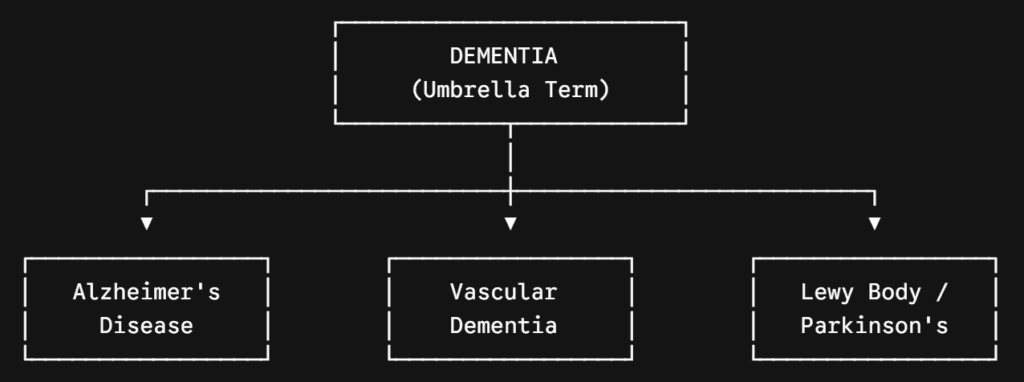
Underneath this medical umbrella sit several specific diseases:
- Alzheimer’s Disease: The most common cause of dementia, accounting for 60% to 80% of all cases. It is characterized by the accumulation of amyloid plaques and neurofibrillary tangles in the brain.
- Vascular Dementia: Often occurring after a stroke or series of mini-strokes (TIAs), this form of decline is caused by microscopic bleeding and blood vessel blockage in the brain.
- Lewy Body Dementia (LBD): Associated with abnormal protein deposits called alpha-synuclein. It frequently causes vivid visual hallucinations, severe fluctuations in alertness, and motor symptoms that mimic Parkinson’s disease.
- Frontotemporal Dementia (FTD): Primarily affecting the frontal and temporal lobes, this type often presents earlier in life (in a person’s 50s or 60s) and causes dramatic changes in personality, social behavior, and language skills rather than immediate memory loss.
Regardless of the underlying pathology, progressive dementias follow a predictable trajectory of cognitive and physical decline. To help clinicians and families navigate this progression, medical professionals typically utilize the Global Deterioration Scale (GDS), which outlines seven distinct stages, or more commonly, a simplified Three-Stage Model: Early (Mild), Middle (Moderate), and Late (Severe).
2. Early-Stage Dementia (Mild Cognitive Decline)
In the early stage of dementia, the individual may function largely independently. They may still drive, attend social gatherings, and manage their daily routines. However, both the individual and close family members will begin to notice distinct lapses in memory and concentration. [A Daily Routine for Seniors with Dementia: Reducing Anxiety and Sundowning]
Key Behavioral and Cognitive Shifts during Demetia Stages
- Forgetting Familiar Words or Names: Misplacing everyday vocabulary or struggling to remember the name of a long-time acquaintance.
- Losing Possessions of Value: Frequently misplacing car keys, wallets, or important financial documents in unusual places (e.g., putting a wallet in the refrigerator).
- Difficulty Planning or Organizing: Struggling to coordinate a complex family dinner, manage a monthly household budget, or follow a step-by-step recipe they have used for years.
- Subtle Personality Changes: Exhibiting mild anxiety, irritability, or social withdrawal as the individual realizes their cognitive faculties are shifting and attempts to mask their frustration.
Early Signs of Dementia vs. Normal Aging
It is entirely normal for an aging adult to occasionally forget where they left their glasses or take a moment to recall a specific word. The table below illustrates the critical differences between normal, age-related changes and early-stage dementia.
| Normal Age-Related Changes | Early-Stage Dementia Red Flags |
| Making a poor financial choice once in a while. | Experiencing a consistent inability to manage monthly bills or balance a checkbook. |
| Forgetting which day of the week it is, but remembering it later. | Losing track of the current month, year, or season completely. |
| Misplacing an item occasionally but being able to retrace steps to find it. | Putting items in inappropriate places and being entirely unable to locate them. |
| Forgetting a word occasionally but continuing a conversation smoothly. | Stopping mid-sentence, repeating words, or being completely unable to follow a conversation. |
Immediate Action Steps for San Diego Families
The early stage is the most critical window for planning. Because the individual retains their legal capacity and cognitive awareness, families must work together to secure their future.
- Legal and Financial Structuring: Ensure that an updated Durable Power of Attorney (DPOA) for Healthcare and a DPOA for Finances are legally established. This guarantees that trusted family members can make medical and financial decisions smoothly when the condition advances.
- Driving Assessments: Driving safely requires rapid split-second decisions. Families in California can request an objective driving evaluation through the California DMV or utilize local certified driving rehabilitation specialists in San Diego to determine if it is time to transition away from the wheel.
- Establishing a Baseline Routine: Introduce simple, non-invasive memory aids like dry-erase wall calendars, pill organizers, and automated item finders (like Apple AirTags) to prolong independent living.
3. Middle-Stage Dementia (Moderate Cognitive Decline)
The middle stage is typically the longest duration of the disease, often lasting several years. During this phase, the damage to brain tissues spreads to areas that control language, sensory processing, and conscious thought. As a result, the individual requires a much higher level of daily support to remain safe.
Pronounced Behavioral and Physical Shifts during Demetia Stages
- Disorientation to Time and Place: Forgetting their home address, losing track of where they are, or believing they are currently living in a decade from their past.
- Changes in Sleep Patterns: Experiencing disrupted sleep cycles, which often triggers a phenomenon known as Sundowning.
Sundowning: A state of increased confusion, anxiety, agitation, and restlessness that occurs in the late afternoon or early evening hours as natural daylight begins to fade.
- Difficulty with Activities of Daily Living (ADLs): Needing direct prompts or physical assistance with basic hygiene tasks, such as choosing appropriate seasonal clothing, bathing safely, or managing buttons and zippers.
- The Risk of Wandering: Trying to “go home” or leave the house unaccompanied, which poses an immediate, severe physical threat to their safety.
Understanding Behavioral Changes during Demetia Stages: Communication over Logic
As dementia progresses into the moderate stage, the physical architecture of the brain undergoes permanent changes. The logical centers of the mind deteriorate, while the emotional centers remain highly active.
One of the most common mistakes family caregivers make is attempting to use logic or reality orientation to correct a confused senior. For example, if a parent insists they need to go pick up their child from school (even though that child is now a 50-year-old adult), arguing with them will only induce panic, defensiveness, and profound distress.
Instead, professional memory care specialists rely on Validation Therapy and Redirection:
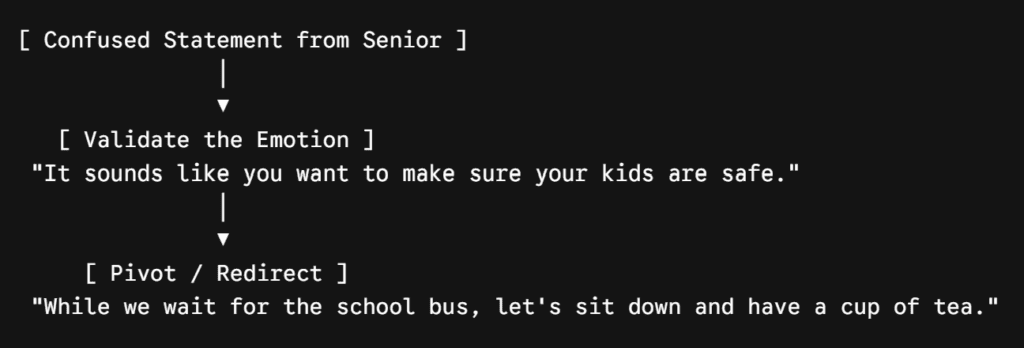
By validating their underlying emotional reality rather than correcting the historical facts, you keep your loved one calm, secure, and cooperative.
4. Late-Stage Dementia (Severe Cognitive Decline)
In the final stage of the disease, individuals lose the ability to respond to their environment, carry on a coherent conversation, and eventually, control physical movement. Cognitive impairment becomes profound, and the physical body begins to shut down.
Key Clinical and Physical Shifts during Demetia Stages
- Loss of Verbal Communication: The individual may reduce their speech to short phrases, single words, or non-verbal vocalizations (groans, sighs, or smiles).
- Total Dependence for Physical Care: Around-the-clock assistance is required for all mobility, transferring, positioning in bed, bathing, dressing, and total incontinence management.
- Difficulty Swallowing (Dysphagia): The brain gradually loses the ability to coordinate the complex muscular movements required to chew and swallow food safely, leading to a high risk of choking or aspiration pneumonia.
- Vulnerability to Infections: The body’s immune defenses decline, making the individual highly susceptible to skin breakdowns (pressure ulcers), urinary tract infections (UTIs), and respiratory illnesses.
The Focus of Late-Stage Care: Comfort and Connection
During the late stage, the goal of care shifts completely from independence to pure comfort, skin integrity, and emotional connection.
- Sensory Connection: Even when words fail, seniors in the late stage remain receptive to sensory inputs. Playing soft music from their youth, gently applying lotion to their hands, or speaking in a calm, soothing tone can profoundly reduce physiological signs of distress.
- Hospice Care Integration: Families should explore palliative and hospice care resources. In San Diego, Medicare entirely covers hospice care services, bringing a team of physicians, specialized nurses, social workers, and spiritual counselors directly into the home to ensure the individual experiences maximum comfort and dignity.
5. Navigating Local San Diego Memory Care Resources
San Diego County boasts a robust infrastructure of specialized organizations, clinical research institutions, and support networks specifically designed to help local families manage a dementia diagnosis.
Alzheimer’s San Diego
Unlike national organizations, Alzheimer’s San Diego is an independent, locally operated non-profit organization where 100% of all funding stays right here in the county.
- What they provide: They offer completely free counseling sessions with family care consultants, specialized dementia education classes, pre-screened caregiver support groups, and a unique volunteer program that provides companionship to seniors, giving family members a much-needed break.
- How to connect: Located in the central Kearny Mesa neighborhood, their team can be reached directly at (858) 492-4400 for immediate, hyper-local guidance.
The County of San Diego Aging & Independence Services (AIS)
As the designated Area Agency on Aging for the region, AIS provides vital safety and supportive services.
- The Family Caregiver Support Program: Offers local family caregivers access to short-term respite care funding, legal counseling clinics, and step-by-step assistance with setting up home modifications to ensure a safe environment.
- Adult Protective Services (APS) & Safe Return: AIS helps coordinate memory loss registration programs, ensuring that if a senior with dementia wanders away in San Diego, local law enforcement agencies can identify them rapidly and return them home safely.
World-Class Clinical and Diagnostic Institutions
San Diego is a global hub for neurological research and advanced geriatrics. If your family is seeking an accurate diagnosis, a second opinion, or access to groundbreaking clinical trials, consider connecting with these local institutions:
- UCSD Shiley-Marcos Alzheimer’s Disease Research Center (ADRC): Located in La Jolla, this world-renowned clinic provides comprehensive diagnostic evaluations, long-term tracking of cognitive changes, and access to cutting-edge clinical trials for emerging dementia therapies.
- The George G. Glenner Alzheimer’s Family Centers: Known for pioneered the concept of “Town Square” reminiscent therapy—an immersive, indoor adult day center designed like a 1950s town to stimulate positive long-term memories for middle-stage seniors.
6. Overcoming Burnout during Demetia Stages
Caring for a loved one with progressive dementia is an exhausting, emotionally heavy responsibility. The prolonged stress of managing behavioral shifts, erratic sleep cycles, and physical care demands often leads to a condition known as Caregiver Burnout.
The Red Flags of Caregiver Burnout
Family caregivers frequently neglect their own health needs to focus entirely on their loved one. Watch closely for these behavioral and emotional signs:
- Chronic Exhaustion: Feeling intensely tired even after a full night of sleep.
- Social Isolation: Dropping hobbies, avoiding friends, and withdrawing from community activities.
- Irritability and Emotional Outbursts: Experiencing sudden flashes of anger, crying spells, or intense frustration over minor issues.
- Physical Symptoms: Developing frequent headaches, a weakened immune system, or worsening chronic conditions due to high cortisol levels.
The Reality Check: You cannot pour from an empty cup. Study after study shows that family caregivers under chronic stress experience high rates of physical illness themselves. Taking a break is not an act of selfishness; it is a clinical necessity to preserve the quality of care your loved one receives.
7. The Power of Specialized In-Home Memory Care
For many families, moving a loved one into a locked memory care facility or assisted living facility can feel incredibly disruptive. Seniors with dementia rely heavily on familiar environments, consistent visual cues, and set daily routines to feel safe. A sudden move to an institutional setting can trigger severe confusion, accelerated cognitive decline, and a spike in challenging behaviors. [Read this guide about Home Care vs. Assisted Living for Your Aging Parent]
Specialized in-home memory care offers a supportive alternative, bringing trained professionals directly into your loved one’s home to provide tailored support while preserving their familiar surroundings.
How Professional Memory Care Enhances Safety during Demetia Stages
When you partner with a licensed home care organization that specializes in cognitive decline, the care plan moves far beyond simple companionship:
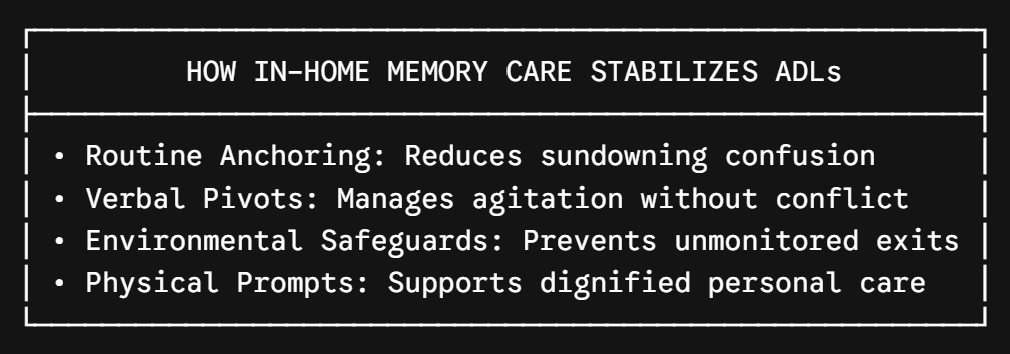
- Preserving Familiar Routines: Professional caregivers maintain strict consistency with wake-up times, meal schedules, and evening wind-down rituals, which significantly lowers the severity of late-afternoon sundowning symptoms.
- Behavioral De-escalation: Caregivers trained in dementia care understand how to navigate repetitive questioning, paranoia, shadow-tracking, and resistance to bathing using specialized sensory techniques, verbal pivots, and musical stimulation.
- Environmental Safety Audits: Specialized care teams help audit the home environment, adding modifications like removing subtle trip hazards, installing clear signage on bathroom doors, and setting up safety locks to eliminate the immediate threat of wandering.
- Nutritional and Hydration Support: Seniors with dementia often forget to drink water or become overwhelmed by complex food textures. Caregivers provide gentle eating prompts, cut food into manageable pieces to prevent choking, and offer creative hydration solutions throughout the day.
8. Financial and Insurance Planning for Memory Care in California
Progressive memory care requires financial foresight. Families must actively evaluate the public and private funding mechanisms available under California law to build a sustainable budget.
Long-Term Care Insurance (LTCI)
If your loved one purchased a Long-Term Care Insurance policy years ago, cognitive decline is almost always a qualifying trigger for benefits.
- The Trigger: Most policies automatically activate coverage when an individual shows severe cognitive impairment requiring substantial supervision to protect themselves from threats to health and safety, or when they require assistance with two out of six Activities of Daily Living (ADLs).
- Important Step: Contact the policy administrator immediately to understand their specific elimination period (typically 30 to 90 days) and verify that they accept invoicing from a California-licensed Home Care Organization (HCO).
Veterans Aid & Attendance Benefits
The Department of Veterans Affairs offers an enhanced pension program called Aid & Attendance for wartime veterans and their surviving spouses who require the regular assistance of another person to manage daily life or remain safe from a cognitive standpoint.
- The Financial Impact: This tax-free benefit can provide substantial financial support per month to offset the cost of professional hourly home care.
- The Requirement: The veteran must have served during an official wartime window, received an honorable discharge, and meet specific asset and income thresholds set by the VA.
Medi-Cal and the IHSS Program
For lower-income or middle-income seniors who have utilized spend-down strategies, California’s Medicaid program (Medi-Cal) offers structural help through the In-Home Supportive Services (IHSS) program.
- The Landscape: Notably, California has entirely removed the asset limit for Medi-Cal eligibility, evaluating qualifications based strictly on monthly income streams rather than personal savings or home equity.
- The Benefit: IHSS can fund a designated number of hours of care each month to ensure that a senior with severe cognitive impairment can age safely in place rather than being prematurely placed into an institutional skilled nursing facility.
Conclusion: Empathy, Education, and Proactive Steps during Demetia Stages
A dementia journey is a marathon of the heart. While the progressive nature of the condition means facing regular changes, understanding the distinct stages allows your family to stay one step ahead. By recognizing early signs, implementing positive communication techniques like validation therapy, and accessing the rich network of local San Diego organizations like Alzheimer’s San Diego and AIS, you can confidently navigate this transition.
You do not have to walk this challenging road alone. Embracing professional, specialized in-home memory care allows you to transition out of the exhausting role of a constant crisis manager and return to what matters most: being a supportive son, daughter, or spouse. With the right education, structural safeguards, and professional support, your loved one can navigate the stages of dementia with comfort, safety, and unwavering dignity in the familiar peace of their own home.