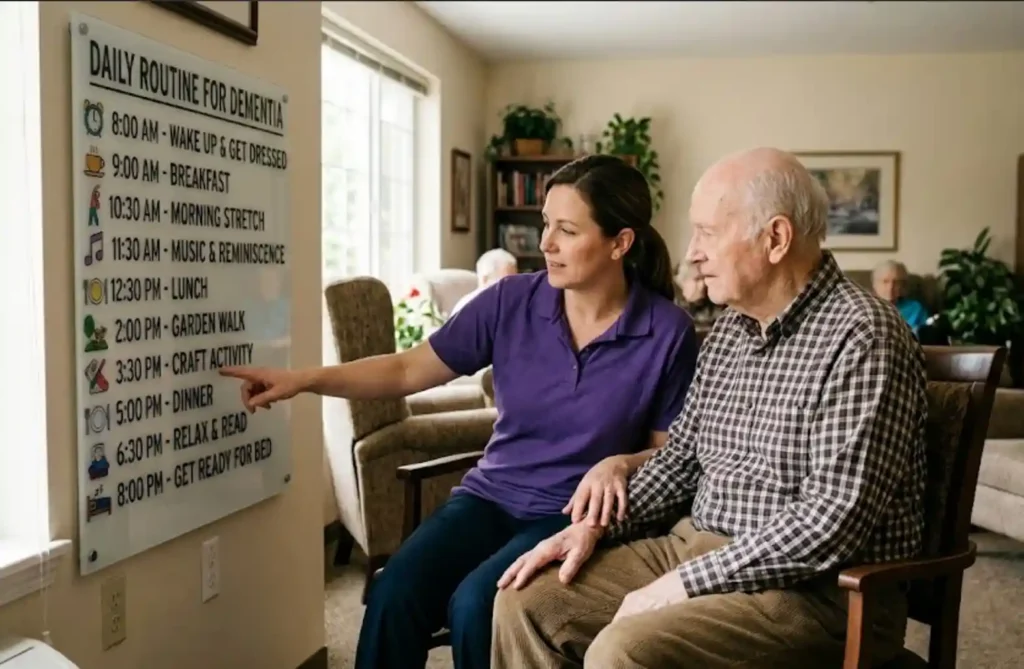
Caring for a loved one with advanced dementia is a profound journey of love, patience, and resilience. However, it can also bring some of the most emotionally and physically taxing challenges a family will ever face. Among these, witnessing sudden mood swings, verbal outbursts, or physical aggression can be heartbreaking and overwhelming.
If you have found yourself frozen in place after a loved one suddenly lashed out during a bath, or if you feel a pit of anxiety in your stomach as late afternoon approaches, you are not alone.
It is vital to understand one core truth right from the start: aggression in dementia is not a deliberate choice. Your loved one is not acting out to be difficult, malicious, or hurtful. Instead, as cognitive decline alters the physical structure of the brain, their ability to process the world, control impulses, and communicate basic needs erodes.
In advanced stages of Alzheimer’s or other forms of dementia, behavior becomes their only remaining language. An aggressive outburst is almost always an unexpressed cry for help—a reaction to fear, hidden physical pain, or overwhelming confusion.
This comprehensive guide will help you decode those behaviors, identify hidden triggers, and master immediate de-escalation techniques. By changing how we interpret and respond to these challenging moments, we can restore safety, peace, and dignity to our homes.
1. The Neurobiology of Dementia: Why Aggression Happens
To manage aggressive behaviors effectively without experiencing deep personal hurt or resentment, it helps to look at what is physically happening inside a brain affected by advanced dementia. [A Daily Routine for Seniors with Dementia: Reducing Anxiety and Sundowning]
+------------------------------------------------------------+
|                THE DEMENTIA BEHAVIOR LOOP                  |
|                                                            |
|  1. BRAIN DAMAGE       --> 2. IMPOVERISHED COMMUNICATION    |
|     (Loss of impulse       (Cannot articulate pain,        |
|      control & logic)       fear, or sensory overload)     |
|             ^                                 |            |
|             |                                 v            |
|  4. RE-ESTABLISHING    <-- 3. AGGRESSION AS A SIGNAL       |
|     SAFETY/CALM            (Fight-or-flight reflex kicks   |
|     (Through caregiver)     in to protect themselves)      |
+------------------------------------------------------------+
As neurodegenerative diseases progress into late stages, they cause widespread damage across multiple regions of the brain:
- The Prefrontal Cortex: This is the brain’s executive center, responsible for logic, reasoning, social decorum, and impulse control. When this area deteriorates, the internal “filter” disappears. An fleeting flash of frustration that a healthy brain would easily suppress is instantly expressed outward as a shout, a push, or a thrown object.
- The Amygdala: This almond-shaped structure regulates our survival instincts—specifically the “fight, flight, or freeze” response. In advanced dementia, while the logical parts of the brain waste away, the amygdala remains highly active and hyper-reactive. Because the person can no longer accurately evaluate their surroundings, the amygdala constantly misinterprets harmless situations (like a caregiver approaching with a washcloth) as lethal threats, triggering an immediate defensive, combative survival reflex.
- The Temporal and Parietal Lobes: Damage here strips away language processing (aphasia) and the capacity to perceive sensory inputs correctly. If a person cannot find the words to say “My hip hurts” or “That television is too loud,” the pent-up cognitive distress eventually boils over into physical resistance.
When you understand that an outburst is a neurological reflex rather than a behavioral flaw, it shifts your perspective from reacting to a provocation to investigating an unmet need.
2. Common Triggers for Sudden Mood Changes
Aggressive behavior in advanced dementia is rarely random. It is almost always set off by an internal or external trigger. As a family caregiver, your role shifts from assistant to detective. When a mood swing occurs, look closely for these primary culprits:
Physical Discomfort and Hidden Pain
Because individuals in late-stage dementia cannot articulate physical ailments, pain is the number-one hidden driver of sudden aggression.
- Urinary Tract Infections (UTIs): In older adults with dementia, a UTI rarely presents with just physical symptoms. Instead, it causes a sudden, dramatic spike in confusion, delirium, and combative behavior. If your loved one displays a rapid, unexplained personality shift over 24 to 48 hours, a UTI screening should be your first step.
- Gastrointestinal Distress: Chronic constipation, acid reflux, or severe bloating can cause agonizing, ambient pain that builds up over days, manifesting as explosive irritability during normal daily activities.
- Poor Dental Fit or Joint Pain: Ill-fitting dentures can make eating painful, while underlying arthritis can cause sharp pain when they are assisted out of a chair or bed.
Environmental Overstimulation
A brain with advanced cognitive decline loses the ability to filter out background stimuli. What feels like a lively, normal living room to you can feel like absolute chaos to them.
- Sensory Overload: A television blaring commercial breaks, children playing, a vacuum running, and bright fluorescent overhead lighting can cause an invisible sensory traffic jam in their mind, triggering a defensive panic attack.
- The Terror of Shadows and Reflections: Late-stage dementia damages spatial awareness and visual tracking. Mirrors can be terrifying because the person sees a “stranger” in their room, not realizing it is their own reflection. Deep shadows cast on the floor by floor lamps can look like physical holes or traps, causing them to fight back out of fear.
Communication Barriers and Rushed Transitions
- Feeling Trapped or Forced: If you approach a loved one from behind, pull their arm, or start unbuttoning their shirt without explaining what you are doing, their immediate instinct is that they are being assaulted.
- Complex Explanations: Giving long, multi-step instructions (e.g., “We need to get your shoes on right now because we have an appointment with Dr. Smith across town and traffic is terrible”) causes immediate mental gridlock. Unable to process the words, they lash out to make the confusing noise stop.
3. The Phenomenon of “Sundowning”
No discussion of dementia aggression is complete without addressing sundowning—a distinct behavioral phenomenon characterized by a marked increase in confusion, anxiety, pacing, and combativeness during the late afternoon and early evening hours.
       SUNDOWNING ESCALATION TIMELINE

  12:00 PM |===============================> High Cognitive Reserve (Calmer)
           |
   4:00 PM |======================> Exhaustion / Shadows Lengthen (Anxiety Rises)
           |
   7:00 PM |==============> Peak Agitation / Combativeness Risk (Sundowning Peak)
Why Does Sundowning Occur?
While the exact biological cause is still being studied, researchers point to a combination of factors:
- Circadian Rhythm Disruption: Dementia progressively damages the suprachiasmatic nucleus—the brain’s internal clock—making it difficult for the body to distinguish between day and night.
- End-of-Day Cognitive Fatigue: After spending hours trying to decipher an environment that no longer makes sense, the brain’s mental energy is entirely depleted by 4:00 PM. With no cognitive reserve left, coping mechanisms completely break down.
- Caregiver Energy Transitions: Late afternoon is often a stressful time in households. Dinner is being prepared, phone calls are being made, or family members are returning home. Individuals with dementia are highly empathetic mirrors; they absorb and reflect the unspoken stress and rushed energy of the people around them.
Proactive Strategies to Minimize Sundowning
To blunt the impact of evening mood swings, establish a strict daily preventative routine:
- Maximize Morning Light: Expose your loved one to bright, natural sunlight or high-lux light therapy boxes early in the day. This helps anchor their internal biological clock and improves nighttime sleep quality.
- Schedule Major Activities Early: Plan baths, doctor visits, or exercise for the morning hours when your loved one’s patience and mental stamina are at their peak. Never schedule challenging personal care tasks after 3:00 PM.
- Manage the Afternoon Sensory Shift: As the sun begins to set, draw the blinds and close the curtains to eliminate creeping shadows and window reflections. Turn on warm, ambient indoor lighting early so there is no sudden transition from day to night.
- Introduce Calming Cues: Play soft, familiar music from their youth (such as big band tracks or familiar hymns) starting at 3:30 PM. Introduce a predictable, low-stress afternoon ritual, like a warm cup of herbal tea or looking through a familiar photo book together.
4. Immediate, Step-by-Step De-escalation Techniques
When a loved one is in the middle of an aggressive episode, trying to reason, argue, or explain will only escalate the crisis. In that moment, logic is completely unavailable to them. Your goal is not to win an argument; it is to restore a feeling of absolute safety.
Here is the exact crisis communication protocol to follow when a situation begins to spiral:
1.Pause, Step Back, and Create Space:Immediate Response.
Do not crowd the person, lean over them, or attempt to physically restrain them unless there is an immediate, life-threatening danger. Move at least 4 to 6 feet away. Standing too close triggers the amygdala’s claustrophobic survival instinct, which increases physical resistance.
2.Adopt a Non-Threatening Posture:Body Language Calibration.
Keep your hands open, visible, and relaxed at your sides. Avoid crossing your arms, putting your hands on your hips, or pointing fingers, as these are universal non-verbal signs of hostility. Lower your physical stature so you are at or slightly below their eye level.
3.Match Their Emotion, Not Their Volume:Validation Over Correction.
Never say “Calm down” or tell them they are overreacting. Instead, validate their current emotional reality with deep empathy. Use a low, slow, melodic, and reassuring voice. Use simple scripts like: “I can see that you are incredibly angry right now, and I am so sorry,” or “You feel unsafe here, don’t you? I am right here, and I will keep you safe.”
4.Pivot, Redirect, and Introduce a Distraction:The Behavioral Turn.
Once their respiratory rate slows and their posture softens, gently pivot their focus away from the source of distress. Do not bring up the topic that upset them again. Instead, introduce a highly enticing, comforting alternative: “You know, I am feeling really clumsy today. Can you come help me fold these towels in the kitchen?” or “Let’s go into the other room and check on that apple pie.”
The 3 Core Rules of Crisis Response
Rule 1: Never Correct, Validate Instead
If your loved one is screaming that someone stole their wallet or that they need to leave to pick up their young children from school, do not tell them they are wrong or that their children are adults. To them, those children are currently waiting in the cold. Say: “I know how much you love your kids, they are so lucky to have you. Let’s get a warm snack ready for them while we wait.” Validate the love and intent, then redirect the action.
Rule 2: Control Your Own Emotional Echo
Individuals with cognitive decline lose linguistic comprehension long before they lose the ability to read emotional energy. If your jaw clenches, your breathing turns shallow, or your voice takes on a sharp, clipped edge, they will instantly absorb that tension and match it with increased aggression. Fake a sense of utter calm until it becomes real.
Rule 3: Give Up on Perfect Task Completion
If your loved one becomes aggressively resistant halfway through a shower or meal, drop it immediately. There is no medical or hygienic emergency that justifies a terrifying, traumatic physical battle. Step away, preserve the relationship, let their nervous system reset for 45 minutes, and try again with a completely fresh approach later.
5. Non-Pharmacological Interventions
Before turning to prescription medications—which often carry heavy black-box warnings and significant side effects for elderly individuals with cognitive decline—clinical guidelines strongly emphasize implementing structured, evidence-based non-pharmacological interventions.
The Power of Validation Therapy
Developed by Naomi Feil, Validation Therapy is the gold standard for late-stage behavioral management. It teaches caregivers to stop dragging the individual back into our collective factual reality, and instead step into their psychological timeline.
If they are crying out for their mother, asking “Where is my mom?”, a factual response (“Your mother passed away twenty years ago”) inflicts fresh, traumatic grief, leading to sudden, protective anger. A validation response addresses the underlying feeling of loneliness or insecurity: “Your mom is wonderful, isn’t she? What did she used to cook for you when it rained?” This simple shift satisfies their emotional hunger and immediately de-escalates stress.
Personalized Sensory Therapies
- The Power of Music Memory: Music bypasses the damaged areas of the cerebral cortex to access deeply embedded emotional pathways in the brainstem. Work with family members to compile a hyper-personalized playlist of songs from their formative years (ages 15 to 25). Playing this music during known high-stress windows can reduce overall agitation scores by over 30%.
- Strategic Aromatherapy: Clinical studies suggest that ambient diffusion of essential oils like Lavender or Sweet Orange can drop salivary cortisol levels in adults with dementia. Diffuse lavender in the bedroom starting in the late afternoon to promote relaxation and prepare the nervous system for sleep.
- Doll and Companion Therapy: For many individuals in advanced dementia, having a realistic, weighted lifelike baby doll or a robotic therapeutic pet (like an interactive companion cat or dog) provides a profound sense of purpose, security, and comfort. Nurturing a companion animal reduces boredom and loneliness, which are two major foundational drivers of daytime agitation.
6. Balancing Care at Home: Professional Support and Self-Care
Managing chronic aggression and unpredictable mood swings single-handedly is one of the fastest paths to profound physical, emotional, and financial caregiver burnout. It places both the individual with dementia and the primary caregiver at deep physical risk.
Recognizing your limits is not a sign of weakness or a failure of love—it is a critical requirement for sustainable, safe care.
+-------------------------------------------------------------+
|              THE STRATEGIC CARE SYSTEM                      |
|                                                             |
|   [ FAMILY CAREGIVER ]  <=======>  [ HOME CARE PARTNER ]    |
|   • Deep Personal History          • Professional Training   |
|   • Emotional Connection           • Crisis De-escalation    |
|   • Loving Advocacy                • Respite Relief Support  |
|                                                             |
|   =======================================================   |
|            Result: Balanced, Safe, Longevity-Focused Care    |
+-------------------------------------------------------------+
When It Is Time to Bring in Professional Support
If you notice any of the following warning signs developing in your home, it is time to look into partnering with a specialized private home care agency:
- The Aggression Becomes Physically Unsafe: If your loved one is hitting, biting, scratching, throwing dangerous heavy objects, or threatening to use household items as weapons.
- Sleep Deprivation: If your loved one paces all night due to advanced sundowning, and you are unable to sleep because you are terrified they will wander outside or fall, chronic exhaustion will quickly compromise your immune system and mental health.
- Refusal of Core Care Tasks: If your loved one has completely stopped allowing you to assist with vital tasks like bathing, incontinence care, or essential medication management, resulting in skin breakdown or escalating medical crises.
- Caregiver Burnout Symptoms: If you find yourself crying frequently, experiencing severe feelings of resentment, feeling isolated from friends, or experiencing unmanageable physical fatigue, you need immediate respite.
How Professional Home Care Can Help
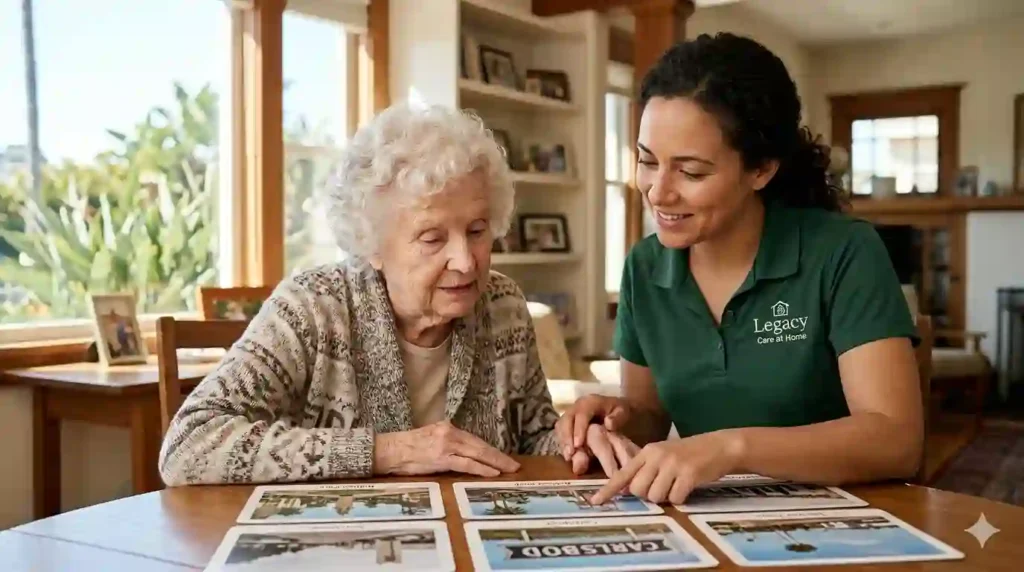
Partnering with a dedicated agency like Legacy Care at Home allows you to step back from the exhausting role of a 24-hour clinical manager and return to being a supportive son, daughter, or spouse.
Professional, dementia-trained caregivers bring specific benefits to your family’s care ecosystem:
- Specialized Behavior Training: Professional caregivers are explicitly trained in crisis prevention, advanced redirection, and validation techniques. They understand how to read early, non-verbal indicators of agitation and pivot care before an outburst occurs.
- Objective Emotional Distance: Because professional caregivers do not share decades of complex family history with the individual, they are not emotionally triggered when a client says something harsh or accusatory. This allows them to maintain an unwavering aura of calm that naturally de-escalates a tense environment.
- Vital Respite and Relief: Whether it is a few hours a day to allow you to run errands, go to your own medical appointments, and rest, or 24/7 comprehensive private duty coverage, professional care gives you the critical breathing room needed to sustain your own health.
Summary Comparison: How to Respond vs. What to Avoid
To keep these strategies highly actionable during everyday care routines, use this scannable reference table to guide your daily behavioral interactions:
| Scenario / Behavior | WHAT TO DO (De-escalation) | WHAT TO AVOID (Escalation Triggers) |
| Accusations of Theft (e.g., “You stole my money!”) | Validate the fear: “I know how scary it feels to lose things. Let’s look together, I’ve got your back.” Keep duplicates of missing items handy. | Do not argue, defend yourself, or try to logically prove you didn’t steal it. This makes them feel ganged up on. |
| Physical Resistance (e.g., Fighting during a bath) | Drop the task immediately. Step back, apologize for causing distress, and walk away to try again in an hour. | Do not attempt to physically force, hold down, or rush them through the task to “just get it over with.” |
| Demanding to Go Home (When they are already home) | Address the emotional need: “You want to feel comfortable and safe. I want that too. Let’s sit down and have a warm snack first.” | Do not explain that they have lived here for ten years, or point out their furniture. This highlights their confusion and sparks anger. |
| Late-Afternoon Agitation (Sundowning pacing) | Close blinds early to eliminate shadows. Put on soft 1940s music, dim the lights, and offer a simple repetitive chore like folding towels. | Do not schedule heavy tasks, introduce large crowds of visitors, or leave loud televisions running in the evening. |
| Verbal Outbursts / Shouting | Lower your posture to eye level, speak in a quiet, slow whisper, and say: “I am so sorry you’re upset. You are safe here.” | Do not raise your voice back, mimic their volume, cross your arms defensively, or scold them for using bad language. |
Conclusion: One Day at a Time
Managing the psychological and behavioral shifts of advanced dementia is undoubtedly one of the most demanding tasks a caregiver will ever encounter. It requires a profound shifts in expectations, communication styles, and daily habits.
On the days when an outburst occurs despite your best efforts, remember to be gentle with yourself. Your loved one’s aggressive behavior is a reflection of a progressive disease process, not a reflection of the quality of your care or the depth of their love for you.
By building a calm environment, mastering the art of emotional validation, and bringing in a trusted network of professional home care support when the physical load becomes too heavy, you can protect both your loved one’s dignity and your own well-being. You do not have to walk this challenging path alone.