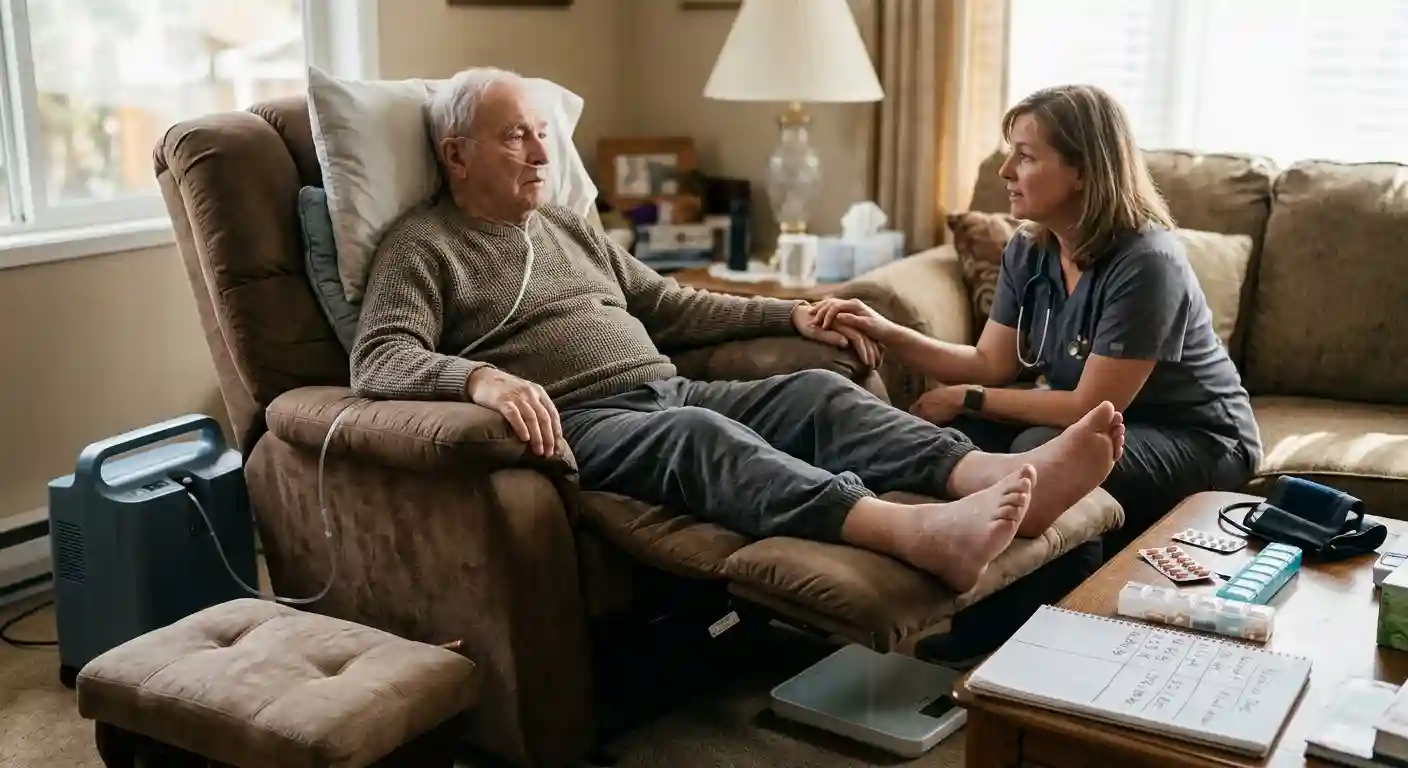
Introduction: Managing Congestive Heart Failure in the Comfort of Home
A diagnosis of Congestive Heart Failure (CHF) in an aging parent or loved one can feel overwhelming. Heart failure is a chronic, progressive condition in which the heart muscle becomes too weak or stiff to pump blood efficiently throughout the body. According to the Centers for Disease Control and Prevention, nearly 6.7 million American adults live with heart failure, and it remains a leading cause of hospitalization among seniors aged 65 and older.
Despite the serious nature of the condition, a CHF diagnosis does not mean an older adult must give up their independence or move into a facility. Research supported by the American Heart Association indicates that high-quality home-based care and proactive symptom monitoring significantly reduce 30-day hospital readmissions and improve quality of life.
Managing CHF at home requires a delicate balance. It involves strict medication schedules, rigorous daily weight monitoring, fluid tracking, sodium control, and gentle physical activity. For busy families balancing careers and personal responsibilities, managing these complex daily protocols can lead to caregiver burnout. This is where professional, non-medical in-home care plays a transformative role.
This comprehensive guide explores how dedicated in-home care support empowers seniors with CHF to manage their symptoms safely, avoid emergency room visits, and enjoy dignity in their golden years.
Understanding Congestive Heart Failure in Older Adults
To support a senior with CHF effectively, caregivers must first understand what occurs inside the body when the heart’s pumping mechanism is compromised.
When the heart cannot pump blood effectively, circulation slows down, and blood returning to the heart through the veins backs up. This causes fluid to build up in tissues throughout the body—a state known as congestion. Fluid commonly accumulates in the feet, ankles, legs, abdomen, and lungs.
The Two Main Types of Heart Failure
According to the Heart Failure Society of America, CHF is generally categorized into two primary forms based on left ventricular ejection fraction (LVEF):
- Heart Failure with Reduced Ejection Fraction (HFrEF): Also called systolic heart failure. The heart muscle becomes weakened and stretched, preventing the left ventricle from squeezing forcefully enough to pump sufficient oxygenated blood out to the body.
- Heart Failure with Preserved Ejection Fraction (HFpEF): Also called diastolic heart failure. The heart muscle becomes stiff and rigid, preventing the left ventricle from relaxing properly and filling with enough blood between beats.
Common CHF Symptoms to Watch For
Recognizing early warning signs prevents acute flare-ups and hospital visits. The main symptoms include:
- Dyspnea (Shortness of Breath): Breathlessness during routine activities, at rest, or when lying flat in bed.
- Fluid Retention (Edema): Visible swelling in the feet, ankles, legs, or lower back.
- Rapid Weight Gain: Gaining 2–3 pounds in 24 hours or 5 pounds in a week due to fluid accumulation.
- Chronic Fatigue and Muscle Weakness: Feeling continuously exhausted as blood flow is diverted away from limbs to vital organs.
- Persistent Cough or Wheezing: White or pink-tinged sputum caused by fluid congestion in the lungs.
- Abdominal Swelling and Loss of Appetite: Fluid backup in the digestive tract causing early satiety, nausea, or bloating.
Caregiver Tip: Sudden changes in cognitive function, confusion, or disorientation in a senior with CHF can indicate hypoxia (low oxygen) or acute fluid buildup. To understand how acute confusion presents in older adults, read our guide on Sudden Confusion in Seniors: Is It Dementia or a Urinary Tract Infection (UTI)?
The Role of In-Home Care in CHF Management
Non-medical in-home caregivers act as the frontline eyes and ears for families and medical professionals. While caregivers do not prescribe medications or perform invasive medical procedures, their non-medical support ensures that physician-prescribed CHF care plans are followed meticulously every day.
1. Daily Weight Tracking and Log Management
A sudden increase in body weight is the earliest indicator of fluid retention—often occurring days before visible leg swelling or breathlessness appears.
In-home caregivers assist seniors by establishing a daily weighing routine:
- Weighing the senior every morning immediately after waking up and using the bathroom, but before breakfast.
- Ensuring consistent conditions (weighing on the same calibrated scale, on a hard floor surface, wearing similar light clothing).
- Recording the weight in a dedicated daily CHF logbook or digital health tracker.
- Promptly alerting family members or home health nurses if weight increases by more than 2 to 3 pounds overnight or 5 pounds in a single week.
2. Medication Reminders and Adherence
Cardiologists routinely prescribe complex medication regimens to manage CHF symptoms, including diuretics (“water pills”), ACE inhibitors, ARBs, beta-blockers, and mineralocorticoid receptor antagonists. Skipping doses or taking medications at the wrong time of day can trigger acute heart failure decompensation.
In-home caregivers provide crucial assistance by:
- Offering timely verbal reminders for each medication dose based on the doctor’s prescribed schedule.
- Assisting with prescription pickup and pharmacy coordination.
- Monitoring for common side effects like dizziness or lightheadedness when standing (orthostatic hypotension), which increases fall risks.
3. Nutrition and Low-Sodium Meal Preparation
Excess sodium acts like a magnet for water, causing the body to retain fluids and forcing the heart to work significantly harder. Doctors typically restrict CHF patients to 1,500–2,000 milligrams of sodium per day.
Professional caregivers assist with:
- Grocery shopping for fresh, whole ingredients while avoiding hidden sodium in canned foods, frozen meals, processed meats, and condiments. (Learn about senior nutrition.)
- Preparing appetizing, high-protein, low-sodium meals using herbs, citrus, and spices instead of salt.
Nutritional Support: Proper nourishment is vital for seniors managing chronic illness. Learn how to prepare nutritious, low-sodium dishes by reading our article on Senior Nutrition: High-Protein, Easy-to-Prep Meals for Older Adults.
4. Fluid Restriction Monitoring
Many seniors with advanced CHF are placed on strict fluid intake limits (typically 1.5 to 2 liters per day). Non-medical caregivers help track and log liquid consumption—including soups, popsicles, ice cream, and gelatin—to ensure limits are respected without causing dehydration.
Action Plan: The CHF “Traffic Light” Symptom Tracker
To help family caregivers and professional aides monitor CHF symptoms systematically, clinicians recommend using a simple color-coded symptom tracking framework developed by cardiology organizations like the National Heart, Lung, and Blood Institute.
Green Zone: All Under Control (Target Zone)
Your parent’s symptoms are baseline and stable.
- Symptoms: No shortness of breath beyond normal limits; swelling in legs/feet is baseline or absent; weight is stable; chest pain is absent.
- Action: Continue daily weights, maintain medication routines, stick to low-sodium nutrition, and keep up with gentle daily activity.
Yellow Zone: Caution & Warning Signs (Action Needed)
Your parent’s symptoms are changing. Fluid is accumulating, and the medical team should be notified.
- Symptoms:
- Weight gain of 2–3 pounds in 24 hours or 5 pounds in a week.
- Increased swelling in legs, ankles, feet, or abdomen.
- Increased shortness of breath during light daily activities.
- Trouble breathing when lying flat, requiring extra pillows or sleeping in a recliner.
- Frequent dry cough, especially at night.
- Feeling unusually tired or lacking energy.
- Action: Contact the treating physician or home health nurse immediately. Doctor-approved adjustments to diuretic dosages may be required.
Red Zone: Medical Emergency (Immediate Action Required)
Your parent is experiencing severe heart failure decompensation.
- Symptoms:
- Severe, unyielding shortness of breath or gasping for air while sitting still.
- Chest pain, pressure, or tightness.
- Coughing up pink, frothy sputum.
- Severe dizziness, confusion, fainting, or inability to talk in full sentences.
- Action: Call 911 immediately.
Home Safety and Fall Prevention for CHF Patients
Seniors with CHF face a heightened risk of falls. Fluid accumulation makes legs heavy, muscle fatigue affects balance, and diuretic medications cause frequent, urgent trips to the bathroom—often during the night. [Fall Prevention: A Room-by-Room Home Safety Assessment]
Addressing Orthostatic Hypotension
Blood pressure medications and diuretics can cause a sudden drop in blood pressure when standing up from a bed or chair. This causes momentary lightheadedness or blackouts.
In-home caregivers mitigate this risk by:
- Teaching seniors the “sit-and-wait” technique: sitting at the edge of the bed for 1–2 minutes before standing up.
- Assisting with transfers out of bed or recliners.
- Ensuring footwear has proper non-slip rubber soles.
Bathroom Safety Enhancements
Because diuretics increase urinary frequency, bathroom safety is paramount:
- Installing motion-sensor nightlights along the hallway path to the bathroom.
- Placing grab bars near the toilet and inside the shower.
- Using a raised toilet seat and shower bench to minimize fatigue.
Home Safety Resource: To audit your parent’s living environment for potential hazards, consult our checklist on Fall Prevention: A Room-by-Room Home Safety Assessment.
Discharge Planning: Transitioning Home After CHF Hospitalization
The first 30 days following a CHF hospitalization represent a critical vulnerability period. According to published data in the journal Circulation by the American College of Cardiology, nearly 20–25% of heart failure patients are readmitted within 30 days of hospital discharge. Readmissions occur due to medication errors, dietary indiscretion, lack of follow-up care, or unmonitored fluid retention.
Essential Steps for a Successful Home Transition
- Medication Reconciliation: Ensure old prescriptions are retired and new post-discharge prescriptions are filled and understood.
- First Follow-Up Appointment: Schedule a primary care or cardiology check-up within 7 days of discharge.
- Professional In-Home Support: Arrange for home care assistance during the initial weeks home to help with mobility, meal preparation, and daily symptom tracking.
Transition Guide: Prevent the “rehab-to-ER” cycle by following our step-by-step strategy in Discharge Planning Guide: Smoothly Transitioning from San Diego Hospitals to Home.
Financial Considerations & Funding Home Care for CHF
Sustained care for chronic conditions requires financial planning. Families often explore various payment sources to cover in-home care services for CHF management.
| Funding Source | Coverage for Non-Medical Home Care | Key Conditions / Limitations |
| Medicare (Part A/B) | Limited / Non-Coverage (Learn about what Medicare covers) | Covers short-term skilled home health (nursing, PT), but does not cover non-medical personal care aides. |
| Long-Term Care Insurance (LTCI) | Covered | Covers non-medical home care once ADL assistance triggers are met[cite: 1]. |
| VA Aid & Attendance Benefit | Covered | Tax-free monthly pension for eligible wartime veterans and surviving spouses[cite: 1]. |
| Medi-Cal / Medicaid Waivers | Covered (State Specific) | State waivers help low-income seniors access in-home care to avoid nursing home placement[cite: 1]. |
| Private Pay | Covered | Out-of-pocket payment offering total flexibility in hours and care routines[cite: 1]. |
Leveraging VA Benefits & Long-Term Care Insurance
- VA Aid and Attendance: Wartime veterans managing chronic CHF may qualify for tax-free monthly stipends to pay for home care aides. Learn how to apply by reading How to Use the VA Aid and Attendance Benefit for In-Home Care.
- Triggering LTCI Benefits: If your parent holds a long-term care insurance policy, needing help with two or more Activities of Daily Living (such as bathing, dressing, or mobility) due to CHF weakness can activate policy payouts[cite: 1]. Read our detailed advice on Long-Term Care Insurance: How to Trigger Benefits for Home Care.
Supporting Family Caregivers: Preventing Chronic Caregiver Burnout
Caring for an aging parent with congestive heart failure is an emotionally taxing, round-the-clock commitment. The constant anxiety over potential acute flare-ups, fluid overload, and emergency room visits takes a heavy physical and mental toll.
According to the Family Caregiver Alliance, long-term family caregivers face elevated rates of chronic depression, anxiety, and immune system suppression.
How Respite Care Restores Family Harmony
Enlisting professional, non-medical in-home care does not mean you are giving up on your parent. Instead, it ensures your parent receives professional, consistent assistance while giving you the breathing room to rest, attend to your career, and recharge.
Professional caregivers step in to handle heavy daily tasks—such as grocery shopping, low-sodium meal prep, weight logging, and light housekeeping—allowing family visits to center on emotional connection and quality time rather than medical chores.
Conclusion: Empowering Seniors with Heart Failure to Live Safely at Home
Living with Congestive Heart Failure presents daily health challenges, but with structured monitoring, proper nutrition, strict medication adherence, and compassionate support, aging adults can maintain a high quality of life at home.
In-home caregivers provide essential day-to-day oversight that keeps heart failure symptoms under control and helps prevent emergency room visits. By serving as an observant partner in care, professional in-home aides protect senior independence, provide peace of mind to families, and ensure that aging loved ones experience safety, comfort, and dignity at home.
Key Takeaways Summary
- Early Detection Saves Lives: Daily morning weight tracking catches fluid retention days before physical swelling appears.
- Dietary Sodium Control: Limiting sodium intake to under 2,000 mg daily prevents water retention and reduces heart strain.
- Fall Prevention is Essential: Diuretic medications increase nighttime bathroom trips and orthostatic dizziness, requiring home safety precautions.
- Proactive Discharge Planning: Dedicated home care during the first 30 days post-hospitalization cuts 30-day readmission risks.
- Respite Support Protects Families: Utilizing in-home care prevents family caregiver burnout and preserves emotional well-being.
External Resources for Congestive Heart Failure Care
For additional medical information, clinical guidelines, and community resources, consult these authoritative health organizations:
- Learn about national heart failure statistics and prevention initiatives from the Centers for Disease Control and Prevention.
- Access comprehensive patient guidelines and caregiving support tools at the American Heart Association.
- Explore patient education modules and heart health resources provided by the Heart Failure Society of America.
- Access medical research and clinical guidelines through the American College of Cardiology.
- Learn about cardiovascular health research and clinical trials at the National Heart, Lung, and Blood Institute.
- Explore long-term care statistics, caregiver support resources, and advocacy through AARP.
- Access educational materials on chronic heart failure management at the Mayo Clinic.
- Find federal healthcare guidelines, Medicare rules, and coverage information at the Centers for Medicare & Medicaid Services.
- Discover caregiver stress mitigation strategies and support networks at the Family Caregiver Alliance.
- Find senior care programs, benefits counseling, and community services through the National Council on Aging.