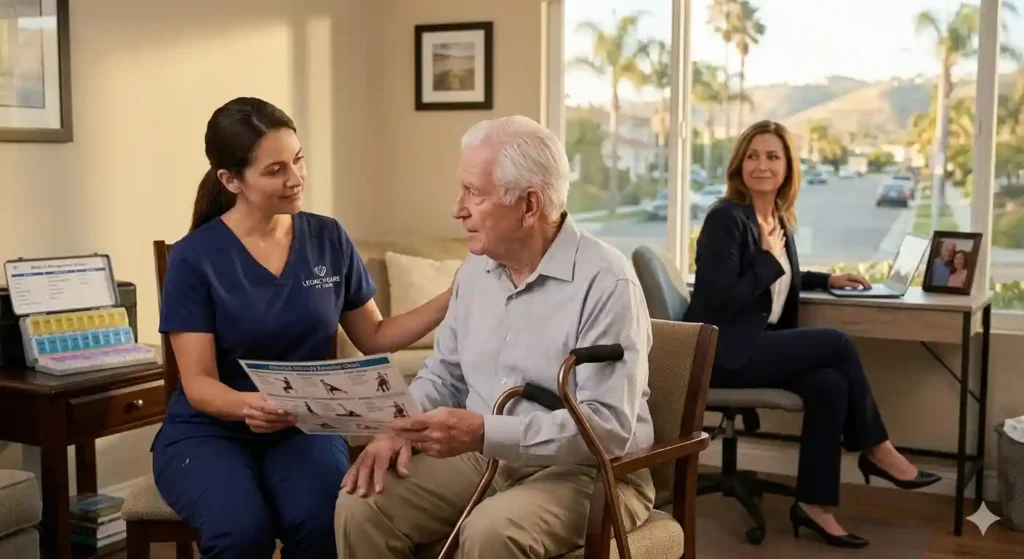
Receiving an Alzheimer’s disease diagnosis within a family brings a wave of complex emotions and practical decisions. For most families, the primary goal quickly becomes maintaining their loved one’s dignity, safety, independence, and comfort in familiar surroundings for as long as possible.
In-home care provides a flexible, highly supportive structure that adapts alongside the progressive nature of cognitive decline. Rather than requiring a move to a long-term care facility during early or moderate stages, professional home care delivers structured, personalized assistance that shifts as needs evolve—ranging from executive function support and companion care to intensive, non-medical physical assistance during advanced decline.
Navigating this care trajectory requires a thorough understanding of how cognitive decline manifests over time and how caregiving strategies must adjust at every phase. By combining professional caregiving techniques, structured daily schedules, proactive environment modifications, and local community support systems, families can create a safe, nurturing, and stable home environment.
Understanding the Alzheimer’s Disease Progression Spectrum
Alzheimer’s disease is a progressive neurological disorder characterized by the gradual deterioration of memory, executive function, spatial orientation, language skills, and physical capabilities. While clinicians often utilize detailed diagnostic scales—such as the Global Deterioration Scale (GDS) or the Clinical Dementia Rating (CDR)—for formal medical monitoring, non-medical family care planning and daily support management are typically organized around three primary functional phases:
- Early Stage (Mild Alzheimer’s): Characterized by subtle memory lapses, executive function challenges, spatial misplacement of personal items, and mild emotional shifts. The individual remains largely independent with essential activities of daily living (ADLs) but requires structured support with instrumental activities of daily living (IADLs) such as financial tracking, meal planning, and medication schedules.
- Middle Stage (Moderate Alzheimer’s): The longest phase of the disease, marked by pronounced memory loss, language impairment, orientation difficulties, behavioral changes (such as sundowning, anxiety, or agitation), and a growing need for assistance with basic self-care tasks like dressing, bathing, and personal hygiene. [A Daily Routine for Seniors with Dementia: Reducing Anxiety and Sundowning]
- Late Stage (Severe Alzheimer’s): Defined by severe cognitive loss, minimal or non-verbal communication, loss of physical mobility, and round-the-clock dependency for personal care, positioning, nutrition, and bodily safety.
Understanding these stages allows care partners and family members to anticipate changing safety risks, behavioral cues, and personal support requirements, ensuring interventions are introduced well before crisis points occur. For a detailed breakdown of how cognitive changes track across diagnosis timelines, review our guide on Understanding Dementia Stages: A Guide for San Diego Families[cite: 1].
Early-Stage Alzheimer’s: Fostering Independence, Safety, and Organization
In the early stage of Alzheimer’s disease, individuals often retain full awareness of their changing cognitive abilities. This awareness can trigger feelings of anxiety, frustration, or subtle social withdrawal. The main focus of early-stage in-home care is preserving autonomy, dignity, and self-esteem while introducing subtle organizational systems that keep the individual safe and confident in their daily routine.
Key Characteristics of Early-Stage Alzheimer’s
During this phase, standard observations typically highlight:
- Short-Term Memory Impairment: Difficulty recalling recent conversations, events, or upcoming appointments, while long-term memories remain intact.
- Executive Function Impairment: Trouble managing bank accounts, balancing checkbooks, tracking utility payments, or planning complex, multi-step tasks like preparing a multi-course dinner.
- Spatial and Temporal Disorientation: Losing track of dates, days of the week, or experiencing brief confusion when navigating familiar driving routes.
- Misplacement of Everyday Belongings: Placing household items in unusual locations (such as placing keys in the refrigerator) and struggling to retrace steps.
Practical In-Home Support Strategies
Rather than taking over tasks entirely—which can lead to feelings of helplessness or resentment—care partners should establish supportive frameworks that enable the individual to manage their own routines successfully (How to Introduce a Caregiver Without Conflict.)
1. Environmental and Organizational Aids
- Visual Labeling Systems: Place clear, discrete written or visual labels on cabinet doors, food pantries, and drawer contents to eliminate search frustration.
- Centralized Orientation Stations: Set up a central location near the main living space with a large-format digital clock displaying the time, day, and date alongside a master white-board calendar.
- Clutter Reduction: Maintain neat, unobstructed living spaces and kitchen countertops to minimize visual distraction and streamline task performance.
2. Managing Medication Protocols
Medication management errors represent one of the highest immediate risks for early-stage seniors living independently or spending extended periods alone.
- Implement locked, automated pill dispensers equipped with auditory and visual reminders to ensure precise dosage timing.
- Establish standardized daily logs or coordinate with home care providers for routine verbal medication reminders. To explore comprehensive strategies for reducing dosage errors, consult our complete guide on Medication Management for Seniors: Safe Systems That Reduce Errors and Stress[cite: 1].
3. Preserving Emotional Well-Being and Social Connections
Maintaining active social connections and cognitive stimulation is vital to slowing functional decline and supporting emotional health. Encourage participation in hobbies adapted to current skill levels—such as container gardening, listening to favorite music collections, attending local adult day programs, or cooking simple recipes alongside a care partner. Family members should practice patient, empathetic communication, focusing on reassurance rather than correcting minor memory slips.
Middle-Stage Alzheimer’s: Managing Behavioral Changes, Communication, and Daily Routines
As Alzheimer’s progresses into the middle stage, cognitive changes begin to affect daily functionality significantly. Independent living without regular oversight becomes unsafe. Individuals struggle with multi-step tasks, experience heightened confusion, and display noticeable shifts in mood, personality, and behavior.
Key Characteristics of Middle-Stage Alzheimer’s
- Loss of ADL Independence: Difficulty selecting weather-appropriate clothing, executing bathing sequences, or managing personal hygiene independently.
- Communication Impairments: Word-finding difficulties, frequent repetition of phrases or questions, and difficulty following multi-step conversations.
- Sundowning and Sleep Disruption: Increased confusion, anxiety, motor restlessness, and pacing during the late afternoon and early evening hours.
- Behavioral Symptoms: Episodes of agitation, paranoia, delusions, wandering tendencies, or resistance to personal care assistance.
In-Home Care Interventions and Structural Adaptations
1. Constructing a Predictable Daily Routine
Structure and predictability are essential for reducing stress in individuals with moderate dementia. A well-designed routine creates a comfortable rhythm for the day, balancing activity and rest while minimizing sensory overload.
- Morning: Gentle wake-up, assistance with personal hygiene and dressing, a nutritious high-protein breakfast, and light physical movement or a supervised walk outdoors.
- Mid-Day: Main meal, structured cognitive or sensory activity (such as sorting laundry, listening to classic radio broadcasts, or working on large-piece puzzles), followed by a quiet rest period.
- Late Afternoon: Transition to calm, low-energy activities, lowering room noise and lighting adjustments to ease sundowning triggers.
To establish an effective schedule tailored to your loved one’s needs, refer to our detailed breakdown: A Daily Routine for Seniors with Dementia: Reducing Anxiety and Sundowning[cite: 1].
2. Addressing Sundowning and Evening Agitation
Sundowning affects a significant portion of individuals with Alzheimer’s disease, manifesting as heightened restlessness, distress, or confusion as natural light fades.
- Optimize Indoor Lighting: Open curtains early in the morning to encourage circadian alignment. In the late afternoon, turn on bright indoor lights to eliminate deep shadows and visual distortions.
- Minimize Stimuli: Turn off background televisions, avoid noisy household appliances, and limit household traffic in main living spaces during late afternoon hours.
- Introduce Calming Rituals: Serve warm herbal teas, offer gentle aromatherapy or hand massages, and play familiar calming music during the afternoon-to-evening transition. For specialized approaches, explore our guide on Managing Sundowning at Home: Actionable Tips for Late-Afternoon Dementia Behaviors[cite: 1].
3. Adaptable Communication Techniques
- Simplify Language: Speak clearly, slowly, and in short sentences using a warm, reassuring tone. Ask simple, direct questions that require a basic yes or no response.
- Utilize Non-Verbal Communication: Maintain gentle eye contact, offer warm physical presence, and use soft gestures to support spoken words.
- Practice Validation Therapy: Avoid arguing, re-orienting forcefully, or debating non-grounded thoughts. Validate the emotion behind the statement instead. If a parent insists they must catch a bus to go to work, respond with empathetic validation: “You were always so dedicated to your career. Tell me about the work you enjoyed most,” rather than pointing out their age or retirement status.
Late-Stage Alzheimer’s: Specialized Physical Care, Comfort, and Dignity
In late-stage Alzheimer’s, full physical and personal care support becomes essential. The disease affects motor skills and automatic sensory pathways in the brain, leading to profound physical decline alongside severe cognitive loss. The core objective of in-home care transitions completely toward maintaining physical comfort, preventing skin and respiratory complications, and honoring human dignity.
Key Characteristics of Late-Stage Alzheimer’s
- Severe Loss of Verbal Communication: Spoken vocabulary diminishes to single words, soft sounds, or non-verbal vocalizations.
- Complete Mobility Loss: Inability to walk, transfer, or sit unassisted, eventually leading to full bedbound or chair-bound status.
- Dysphagia (Swallowing Impairments): Difficulty chewing, managing liquid boluses, or swallowing safely, greatly increasing choking and aspiration risks.
- Total Incontinence: Complete loss of bowel and bladder control (Learn about managing incontinence), and aspiration pneumonia.
Essential Care Interventions for Late-Stage Home Care
1. Positioning and Skin Integrity Maintenance
Bedbound or mobility-impaired individuals face significant risks of developing pressure injuries (bedsores). Caregivers must maintain continuous positioning schedules:
- Repositioning Schedules: Shift the individual’s physical body position at least every two hours while in bed, and every 15 to 30 minutes while seated, utilizing specialized pressure-relieving cushions and mattress overlays.
- Skin Care Hygiene: Keep the skin clean, dry, and thoroughly moisturized. Perform daily visual inspections of bony prominences (heels, sacrum, hips, elbows) for signs of redness or skin breakdown.
2. Dysphagia Management and Safe Feeding Protocols
Swallowing impairments require specific care adaptations to reduce the risk of food or fluid entering the airway:
- Adjust food and fluid textures using thickening agents, puréeing, or softening techniques in accordance with speech-language pathology recommendations. (Learn about senior nutrition.)
- Position the individual in an upright seating posture ($90^\circ$ angle) during all meal times, maintaining that upright position for 30 to 45 minutes post-meal.
- Offer small, slow bites using adaptive soft-tipped spoons, allowing adequate time for complete swallowing before offering another bite.
To review clinical approaches for managing complex swallowing disorders, refer to our resource: Managing Dysphagia at Home: The Ultimate Guide to Swallowing Disorders and Safe Feeding[cite: 1].
3. Sensory Connection and Comfort Care
Even when speech is no longer available, individuals retain the capacity to process emotional warmth through sensory channels:
- Auditory Support: Play favorite music, read aloud from favorite books, or speak in gentle, loving tones.
- Tactile Warmth: Hold hands gently, use soft fabrics, and apply warm lotion during daily care tasks.
- Comfortable Environment: Ensure optimal room temperature, soft lighting, and a peaceful atmosphere free from harsh noises.
Modifying the Home Environment for Cognitive Safety
Modifying the home environment helps reduce accidents, prevents falls, and lowers spatial confusion for individuals with Alzheimer’s disease. Caregivers should conduct systematic evaluations across primary living spaces to identify and eliminate potential safety hazards.
Environmental Adjustments Table
| Home Zone | Specific Hazard | Strategy / Environmental Intervention |
| Living Areas | Loose throw rugs, clutter, trailing cords | Remove all loose throw rugs; secure electrical cords along baseboards; maintain wide, clear walking paths. |
| Living Areas | Poor or uneven lighting | Install bright, glare-free LED lighting; add motion-activated nightlights along pathways leading to bathrooms. |
| Bathrooms | Slippery surfaces, high bathtub walls | Install professional grab bars beside toilets and in shower stalls; apply non-slip adhesive mats; utilize shower chairs. |
| Kitchens | Stoves, ovens, sharp tools, cleaning chemicals | Install appliance auto-shutoff devices or safety knobs; lock away sharp cutlery, appliances, and chemical agents. |
| Entry/Exit Doors | Unmonitored wandering, elopement | Install smart door contact sensors; place deadbolts high or low out of direct line-of-sight; use camouflage door coverings. |
For detailed strategies on assessing home environments for overall physical safety, read our comprehensive guide on How to Prevent Falls at Home: A Room-by-Room Senior Safety Checklist.
Comprehensive Clinical & Community Resources for Alzheimer’s Care
Managing Alzheimer’s disease effectively relies on a connected network of clinical organizations, research institutes, and caregiving associations. Families can turn to these resources for factual updates, clinical guides, and direct support:
- National Institute on Aging (NIA) – Alzheimer’s Caregiving Center: Offers research-backed educational publications, safety guidelines, and daily care tips for family caregivers. Access guidance through the National Institute on Aging Alzheimer’s Caregiving Resource.
- Alzheimer’s Association: Provides round-the-clock support through their national 24/7 Helpline, alongside local support groups and family education programs. Explore caregiver tools at the Alzheimer’s Association Caregiver Portal.
- Family Caregiver Alliance (FCA): Delivers practical care skills training, educational webinars, and state-by-state resource locator tools. Access their library at the Family Caregiver Alliance Resource Center.
- Alzheimer’s Foundation of America (AFA): Offers free helpline consultations staffed by licensed social workers, memory screening initiatives, and educational publications. Learn more at the Alzheimer’s Foundation of America Portal.
- U.S. Department of Veterans Affairs (VA) Dementia Care: Provides specialized medical programs, home-based primary care services, and benefit options for veterans diagnosed with cognitive conditions. Review coverage details on the VA Geriatrics and Extended Care Page.
- Centers for Disease Control and Prevention (CDC) Healthy Brain Initiative: Features public health data, evidence-based recommendations, and brain health resources. Review public health tools through the CDC Healthy Brain Initiative Portal.
- Mayo Clinic Dementia Care Hub: Delivers clear clinical overviews of Alzheimer’s symptoms, diagnostic pathways, medical treatments, and home care strategies. Explore their guides at the Mayo Clinic Alzheimer’s Care Guide.
- Administration for Community Living (ACL) – Brain Health Resources: Connects families to federally supported community services, respite care options, and local Area Agencies on Aging (AAA). Find local programs via the ACL Brain Health Resource Center.
- Johns Hopkins Medicine Memory and Alzheimer’s Treatment Center: Offers clinical literature on managing late-stage behavioral symptoms, medical advances, and therapeutic interventions. Review clinical guidance through the Johns Hopkins Memory Center Guide.
- National Institute of Neurological Disorders and Stroke (NINDS): Features detailed scientific research on dementia causes, ongoing clinical trials, and therapeutic developments. Learn more on the NINDS Dementia Information Page.
Supporting the Family Caregiver: Preventing Burnout and Navigating Respite
Providing ongoing care for a family member with Alzheimer’s disease is physically, mentally, and emotionally demanding. Family caregivers frequently experience high stress levels, physical exhaustion, and caregiver burnout if adequate support structures are not established early on.
Recognizing Symptoms of Caregiver Burnout
- Chronic physical exhaustion, frequent headaches, or sleep disturbances.
- Withdrawal from social activities, hobbies, and personal relationships.
- Feelings of irritability, anxiety, emotional numbness, or helplessness.
- Neglecting personal physical health, medical appointments, and self-care routines.
Integrating Respite and Professional Care
Family caregivers must prioritize their own well-being to remain sustainable care partners over time. Integrating respite care—where professional non-medical caregivers step in for designated hours or shifts each week—provides essential time for family members to rest, attend to personal obligations, and recharge.
Whether utilizing short hourly visits, overnight coverage, or continuous live-in care, professional home care offers peace of mind while preserving family relationships and ensuring high-quality, compassionate care at every stage of Alzheimer’s disease.