
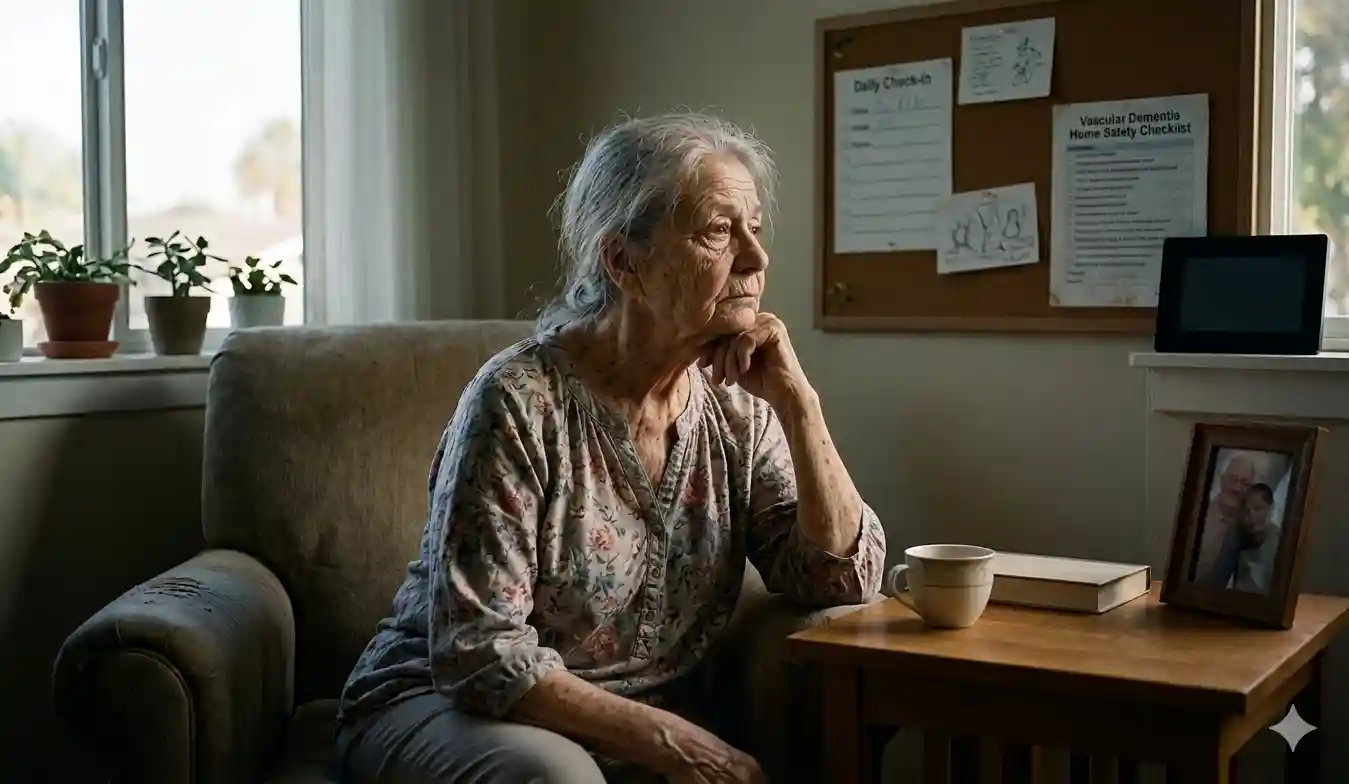
When an aging parent or loved one receives a diagnosis of vascular dementia, families are instantly thrust into a complex emotional and logistical landscape. Among the most pressing, heart-wrenching questions family caregivers face is: Is it still safe for them to live alone? The desire to maintain independence is a deeply ingrained human trait. For many seniors, their home represents a lifetime of memories, comfort, and autonomy. However, vascular dementia introduces a unique pattern of cognitive and physical decline that can turn a familiar living space into a maze of hidden hazards.
Unlike the gradual, predictable progression often seen in Alzheimer’s disease, vascular dementia frequently moves in a sudden, “stepped” pattern. A senior may seem perfectly stable living independently one week, only for a minor, unnoticed silent stroke to instantly alter their judgment, executive functioning, or physical mobility the next.
As a family member or caregiver, balancing your loved one’s desire for independence with the objective reality of their physical and neurological safety is an incredibly heavy burden. This comprehensive, clinically grounded guide is designed to dismantle the guesswork. By understanding the specific mechanics of vascular dementia, identifying critical safety warning signs, evaluating home risks, and discovering specialized options for aging in place safely, you can confidently navigate this transition and protect your loved one’s well-being.
1. What is Vascular Dementia? The “Stepped” Progression
To accurately assess whether a senior can safely remain independent, it is essential to understand how vascular dementia fundamentally differs from other cognitive disorders.
While Alzheimer’s disease is caused by the gradual accumulation of abnormal protein plaques and tangles in the brain, vascular dementia is a direct consequence of cardiovascular damage. It occurs when the brain’s blood supply is impaired, starving brain cells of vital oxygen and nutrients. This can happen through two primary mechanisms:
- A Major Stroke: A single, large blood clot or hemorrhage that blocks blood flow to a critical region of the brain, causing an immediate change in cognitive and physical function.
- Multi-Infarct Dementia (Transient Ischemic Attacks or “Mini-Strokes”): A series of small, often silent micro-strokes that damage tiny, deep blood vessels. These events are frequently so minor that they do not cause temporary paralysis or slurred speech, meaning they often go completely unnoticed by family members at the time.
The Unpredictable “Step-Down” Pattern
Because vascular dementia is tied directly to distinct vascular events, its progression is famously unpredictable. Clinicians refer to this as a stepwise decline.
COGNITIVE
FUNCTION
   ^
   |   [Plateau - Stable period]
   |-----------------------+
   |                       | [Sudden Step-Down: Minor Vascular Event]
   |                       +-----------------------+
   |                                               | [Next Step-Down]
   |                                               +------------------->
   +--------------------------------------------------------------------> TIME
An individual may experience a sudden drop in cognitive ability (the step down), followed by a long period of absolute stability where their symptoms do not seem to worsen (the plateau). This plateau can last for months, or even years, creating a false sense of security. However, the moment another micro-stroke occurs, the individual drops to a new baseline of impairment.
This unpredictable pattern is precisely why living alone with vascular dementia is uniquely high-risk. A senior who manages their household chores and meals perfectly during a plateau phase can lose the cognitive capacity to manage a stove or remember their exit route during an emergency overnight.
2. Executive Dysfunction vs. Memory Loss: The Hidden Hazard
Many families delay intervening or introducing in-home support because their parent “still has a sharp memory.” They note that Mom can remember stories from thirty years ago, recognizes every family member instantly, and can converse warmly with neighbors.
However, in the early and moderate stages of vascular dementia, memory loss is rarely the primary symptom. Instead, the condition aggressively attacks the brain’s frontal lobe, which is responsible for executive functioning.
What is Executive Functioning?
Executive functioning is the brain’s command center. It controls the complex cognitive skills required to plan, organize, focus attention, remember instructions, manage time, and successfully balance multiple tasks simultaneously.
When vascular damage disrupts these frontal circuits, a senior loses their mental toolset for daily problem-solving long before they begin forgetting names or faces.
How Executive Dysfunction Explodes When Living Alone
A senior living completely independently relies heavily on intact executive function to survive safely. When this skill set erodes, a cascade of hidden household crises begins to unfold:
- The Inability to Sequence Multi-Step Tasks: Preparing a basic dinner seems simple, but it requires a complex cognitive sequence: selecting ingredients, turning on an appliance, monitoring cooking times, turning off the heat, and serving. A senior with executive dysfunction can easily get distracted mid-sequence, leaving a burner fully active while they wander into another room.
- Profound Judgment Failures: The ability to assess risk diminishes. A senior may look out the window at a rainstorm or extreme heat and fail to deduce that they need to modify their clothing or adjust their home’s thermostat. They may open the door to aggressive scams or allow strangers into the home because the cognitive guardrails that evaluate danger have eroded.
- Loss of Financial Logic: Balancing a checkbook, understanding utility bills, or managing monthly expenses becomes overwhelming. Utilities may be abruptly shut off due to non-payment, or thousands of dollars may disappear into predatory phone schemes.
- Poor Insight (Anosognosia): Crucially, many individuals with vascular dementia experience a neurological condition called anosognosia—a complete lack of awareness of their own cognitive deficits. They are not intentionally being stubborn or lying to you; their brain is physically incapable of recognizing that they are making mistakes, making them highly resistant to voluntarily asking for help.
3. Red Flags: 8 Signs a Senior with Vascular Dementia Should Not Live Alone
If your loved one is currently living alone, you must look past their verbal assurances during casual phone calls or brief weekend visits. You must actively investigate their living environment for concrete behavioral red flags.
Here are the 8 critical signs that indicate independent living has crossed the threshold from autonomous to hazardous:
1. Medication Mismanagement
Look closely at their pill organization systems. Are prescription bottles completely full when they should be empty? Are daily pill planners completely disorganized, or are doses mixed up? Missing vital cardiovascular medications (like blood thinners, blood pressure regulators, or cholesterol medication) drastically increases the risk of a secondary, catastrophic stroke.
2. Nutritional Decline and Spoiled Food
Open the refrigerator and pantry during your visits. A distinct buildup of expired, moldy, or rotten food indicates the senior can no longer track freshness or safely plan meals. Look for rapid, unexplained weight loss or signs of severe dehydration, which happen when a senior forgets to eat or finds the physical process of meal prep too overwhelming.
3. Neglected Household Hygiene and Hoarding
Take note of the cleanliness of the living space. Unwashed dishes piling up for weeks, baskets of soiled laundry overflowing, strong odors of pet waste left untended, or a sudden, uncharacteristic buildup of clutter and trash indicate that the daily tasks of household maintenance have surpassed their cognitive capacity.
4. Poor Personal Grooming and Hygiene
A noticeable decline in bathing frequency, wearing the exact same clothes for multiple days in a row, unbrushed hair, or a strong body odor are classic signs of dementia-related self-neglect. Often, seniors stop bathing because they develop a neurological fear of the shower, forget how to regulate the water temperature safely, or simply lose track of when they last washed.
5. Unexplained Physical Bruises or Falls
Vascular dementia damages the motor pathways of the brain, leading to a stiff gait, poor spatial awareness, and a significantly elevated risk of falls. If you spot hidden bruises on their arms, hips, or knees, or see damaged drywall or broken furniture, your loved one is likely experiencing falls or severe balance loss while alone. (Learn how to make your home elderly friendly)
6. Wandering, Disorientation, and Getting Lost
An individual with vascular dementia can suddenly lose their geographic orientation, even in a neighborhood they have lived in for forty years. If neighbors report seeing them walking aimlessly, if they get lost driving to the local grocery store, or if they experience confusion about the time of day or night (confusing 3:00 AM for 3:00 PM), living alone is no longer an option.
7. Financial Chaos and Vulnerability
Look for stacks of unopened, late-notice mail, utilities being threatened with disconnection, or strange, frequent withdrawals from their bank accounts. Seniors living alone with impaired executive function are prime targets for financial exploitation from predatory telemarketers or fraudulent contractors.
8. Extreme Social Isolation and Behavioral Changes
Vascular dementia can cause profound mood swings, uncharacteristic paranoia, aggression, or deep apathy. If your loved one is withdrawing entirely from hobbies, refusing to answer phone calls, or exhibiting severe anxiety when leaving the home, they are likely using isolation as a coping mechanism to hide their growing confusion from the outside world.
4. The Physical-Cognitive Connection: TIA Risk and Fall Hazards
Living alone with vascular dementia introduces a unique intersection of physical vulnerability and cognitive impairment. Unlike other forms of dementia that primarily present as mental confusion in the early stages, vascular dementia alters the physical body almost immediately.
The Impact on Gait and Balance
When mini-strokes strike the subcortical regions of the brain—the areas responsible for motor coordination and deep white matter pathways—the physical consequences are distinct:
- The “Vascular Gait”: Seniors often develop a slow, short-stepped, shuffling walk. Their feet may appear magnetically glued to the floor, making it incredibly difficult to clear small thresholds, area rugs, or door jambs.
- Altered Spatial Awareness: The brain struggles to accurately calculate distances. A senior may misjudge the depth of a chair, try to sit down before they reach the edge of the seat, or clip their hips against doorways, leading to severe tipping and loss of balance.
The Nightmare Scenario: A Fall Without Witness
When a cognitively intact senior falls at home, they can typically evaluate their injuries, reach for a nearby phone, activate a medical alert pendant, or drag themselves to a doorway to signal for help.
When a senior with vascular dementia falls while living alone, executive dysfunction disrupts this emergency response:
- They may panic and completely forget how to operate a phone or a medical alert device.
- Cognitive confusion can lead them to attempt to stand up immediately on a broken bone or severe joint injury, causing massive secondary orthopedic damage.
- If they cannot get up and are left down on the floor for hours or days, they are at extreme risk for dehydration, hypothermia, kidney failure due to muscle breakdown (rhabdomyolysis), and severe psychological trauma.
The Threat of Unrecognized TIAs
When an independent senior experiences a fresh Transient Ischemic Attack (TIA) or minor stroke while alone, there is no one there to witness the warning signs (the classic FAST protocol: Facial drooping, Arm weakness, Speech difficulty).
Because the event may resolve or transition directly into a new plateau of confusion, the underlying cardiovascular crisis goes entirely untreated. Missing this window prevents medical teams from adjusting vital antiplatelet or antihypertensive therapies, leaving the door wide open for a massive, permanently disabling stroke to follow.
5. Overcoming the Hurdles of Resistance: How to Have the Conversation
Accepting that independent living is no longer safe is a monumental psychological hurdle for the senior. They are terrifyingly aware on some level that they are losing control over their life, and their immediate defense mechanism is often anger, denial, or fierce resistance.
As a family member, crashing into the conversation with a list of demands or telling them they “can’t live alone anymore” will instantly trigger a defensive wall. You must approach the conversation strategically, with profound empathy and absolute clarity.
1. Shift the Focus from “Cognitive Failure” to “Physical Support”
Avoid framing the need for help around their mental mistakes. Do not say, “You forgot to turn off the stove again, so you aren’t safe.” This triggers immediate shame and denial.
Instead, lean heavily on tangible physical elements or systemic burdens. Say: “Dad, I notice that navigating these stairs is getting exhausting for you, and managing this big house is taking away from your energy. Let’s look into bringing in some support to take care of the heavy lifting so you can just focus on relaxing.”
2. Frame Care as a Trial or a Specialized Project
Seniors are often terrified that accepting help means signing away their freedom forever. Soften the transition by framing any care intervention as a temporary, non-binding experiment.
- “Let’s try having someone come in just twice a week for a month to help with meal preparation and deep cleaning while I’m tied up at work.”
- “Let’s test out this specialized care service for a few weeks to see if it takes some of the stress off your shoulders.”
3. Involve a Trusted Third-Party Medical Authority
Often, a senior will completely reject advice from their own adult children due to long-standing family dynamics, but will comply instantly with a directive from a uniform or a lab coat.
- Schedule an appointment with their primary care physician or neurologist. Private-pay family members can request that the physician explicitly write a formal clinical recommendation for home care or supervision into their treatment plan.
- When your parent resists, you can gently shift the responsibility away from yourself: “Mom, I know you feel fine, but Dr. Smith explicitly stated that your blood pressure requires professional monitoring at home to prevent another stroke. We have to follow his medical orders.”
4. Use the “I” Strategy to Reduce Defensiveness
Do not make the conversation about their inability to cope. Make it about your peace of mind as their child.
- “Mom, I love you so much, and I find myself constantly anxious during my workday worrying about whether you are safe or if you’ve had a fall. It would be an incredible gift to me if we could have someone drop by a few days a week just so I can breathe easier while I’m at the office.”
6. The In-Home Safety Audit: Optimizing the Environment
If your loved one is currently in a stable plateau phase and you are attempting to bridge the gap with part-time in-home care while they spend some hours alone, you must systematically audit the physical home to eliminate structural hazards.
[ ] STOVE SAFETY     --> Install automatic shut-off devices or pull control knobs.
[ ] FLOORS           --> Eliminate all area rugs, runners, and loose extension cords.
[ ] LIGHTING         --> Place motion-activated LED path lights from bedroom to bathroom.
[ ] BATHROOM         --> Install secure grab bars, a raised toilet seat, and a transfer bench.
[ ] MEDICATIONS      --> Lock all active prescriptions in an automatic, timed smart dispenser.
The Kitchen Strategy
The kitchen is the single highest-risk zone for accidental fires and burns.
- Control the Heat: If your parent uses a gas or electric stove, install an automatic stove shut-off device (like a CookStop or FireAvert) that kills power to the appliance if motion is not detected for a specific duration. Alternatively, simply pull the plastic control knobs completely off the stove and store them in a locked drawer when a caregiver is not present.
- Microwave Modifications: Replace complex cooking routines with a simplified, pre-programmed microwave setup. Clearly label a single button (e.g., “30 Seconds / Heat”) with brightly colored tape.
Structural Fall Mitigation
- Clear the Pathways: Strip the home of every single area rug, throw rug, and decorative mat. These are absolute trip traps for a shuffling vascular gait. Secure any loose television cords or telephone wires completely behind baseboards.
- The Bathroom Transformation: The bathroom is a slippery, hard-surfaced hazard zone. Install professional, stud-mounted grab bars inside the shower and directly adjacent to the toilet. Replace a standard tub setup with a specialized tub transfer bench, allowing the senior to sit safely outside the tub and slide their legs across smoothly without stepping over a high porcelain ledge.
- Enforce High-Contrast Lighting: Vascular dementia can impair visual processing. Ensure darkness never catches them off guard. Install motion-activated, high-lumen LED nightlights along the exact path from their bed to the bathroom toilet to prevent disorientation during midnight wakings.
Medication and Asset Security
- Implement Smart Dispensers: Never leave multiple open bottles of cardiovascular medications sitting on a counter. Utilize locked, automated medication dispensing carousels that rotate, beep loudly when a dose is due, and only unlock the exact pills needed for that specific hour. Keep all backup refills locked completely out of sight.
7. Solutions for Aging in Place Safely: Creating a Customized Plan
Declaring that it is unsafe for a senior with vascular dementia to live completely alone does not automatically mean they must be instantly moved into an institutional nursing home or an assisted living facility. For many families, preserving their loved one’s presence in their familiar home is entirely achievable through a well-structured, customized aging-in-place care plan.
To build a sustainable safety net that protects their brain health and physical body, you can combine multiple tiers of professional and technological support:
Specialized Private In-Home Care Management
Hiring a professional home care agency that specializes in neurodegenerative disorders and dementia management is the gold standard for keeping a senior safe at home. [10 Questions You Must Ask When Interviewing In-Home Care Agencies in San Diego]
- Trained caregivers understand how to navigate executive dysfunction without causing agitation. They handle the complex sequencing of meal preparation, ensure strict hydration to protect vascular health, manage meticulous housekeeping, and act as physical transfer anchors to prevent catastrophic falls.
- This care can be scaled precisely to your family’s needs—beginning as short respite visits a few mornings a week and scaling up to comprehensive 24-hour awake care or live-in support as the condition transitions down to its next step.
Adult Day Health Care Programs (ADHC)
Adult day programs offer an incredible, budget-friendly way to break up the isolation of a senior living at home while providing family caregivers with crucial daytime professional respite. These licensed facilities provide structured, dementia-appropriate cognitive exercises, physical therapy components to improve gait stability, social engagement, and nursing supervision during standard business hours.
Leveraging Long-Term Care Insurance (LTCI)
If your loved one had the foresight to invest in a Long-Term Care Insurance policy years ago, now is the exact moment to trigger those benefits. Many families mistakenly believe LTCI only pays for residential nursing homes, but the vast majority of modern policies fully cover professional, licensed in-home care aides.
- To trigger these benefits, a care coordinator or physician typically needs to document that the senior requires hands-on assistance with at least two Activities of Daily Living (ADLs)—such as bathing, dressing, toileting, transfers, or eating—or demonstrates a severe cognitive impairment requiring continuous supervision to protect their physical safety.
8. Comprehensive Comprehensive Vascular Dementia Home Safety Checklist
Print or save this definitive daily and structural checklist to evaluate and continuously maintain your loved one’s home care perimeter.
Environment & Fire Safety
- [ ] Stove Control: Are stove knobs removed or protected by a functional automatic shut-off safety device?
- [ ] Water Heater Regulation: Is the main home water heater set strictly below 120°F (48°C) to prevent severe accidental scalding during unmonitored handwashing?
- [ ] Pathways Cleared: Are all decorative throw rugs, clutter, and exposed electrical cords completely removed from high-traffic walkways?
- [ ] Emergency Exit Paths: Are all doorways, corridors, and exits completely free of structural furniture blocks or storage clutter?
Medical & Clinical Safety
- [ ] Vascular Medication Security: Are all active daily blood thinners, blood pressure pills, and critical stroke-prevention medications securely locked in a timed, automated dispenser?
- [ ] Emergency Visual Vitals: Is a clear, up-to-date document containing their complete medical history, active medications, allergy lists, and primary doctor contacts affixed directly to the refrigerator for emergency responders?
- [ ] FAST Stroke Protocol Visibly Posted: Is a clear guide on how to spot fresh stroke or TIA symptoms posted cleanly for family and partial-time caregivers?
Daily Personal Care Perimeters
- [ ] Hydration Stations: Are fresh, easily liftable cups of water or flavored nectars placed directly next to their favorite resting chairs to counter vascular dehydration?
- [ ] Skin Integrity Audits: Am I actively examining their skin for hidden bruises, minor abrasions, or marks that point to uncompleted or un-reported falls while alone?
- [ ] Daily Nutrition Verification: Is a trusted care provider physically confirming that a balanced, nutritious meal has been consumed, rather than relying on verbal confirmation over the phone?
Conclusion: Balancing Autonomy with Protection
Navigating a diagnosis of vascular dementia requires a profound cognitive shift for the entire family. It forces you to step into a protective role, frequently acting as the executive command center for a parent who once managed every detail of your life.
While the choice to intervene, introduce professional in-home care management, or end solo independent living can bring a deep sense of guilt, it is vital to reframe what true love and protection look like in the context of dementia. Allowing a vulnerable senior to remain completely alone in an environment that threatens their physical survival is not honoring their independence—it is leaving them exposed to a preventable crisis.
By recognizing the unique “step-down” nature of vascular dementia, implementing strict structural home safety audits, leveraging specialized dementia caregiving teams, and triggering long-term care resources, you aren’t stripping your loved one of their life. You are actively building a beautifully supportive, secure fortress around them—giving them the freedom to age in place with the dignity, comfort, and profound safety they deserve.
Pingback: Understanding Dementia Stages: A Guide for San Diego Families - Legacy Care